




Best Ways to Organize Your Closet: 7 Easy Habits for a Clutter-Free Wardrobe
Imagine starting your day not with a frantic search through a cluttered closet, but with a calm, inspiring space where every piece is visible, loved, and ready to wear. A well-organized closet is more than just a tidy room; it's the foundation of personal style, a tool for simplifying your life, and a way to honor the beautiful pieces you've invested in. Whether you're a busy mom juggling schedules, a fashion-conscious woman curating your look, or a college student maximizing a small space, finding the right system is a game-changer. The best ways to organize your closet are not one-size-fits-all; they are tailored systems that reflect your lifestyle and wardrobe needs.
This guide moves beyond generic tips to provide ten distinct, actionable strategies. We will explore everything from the joy-sparking KonMari Method to the efficiency of a capsule wardrobe and the visual appeal of color-blocking. For those with larger spaces, understanding comprehensive walk-in closet organization systems can provide a structural foundation for any of these methods. Each approach is designed to transform your wardrobe from a source of stress into your own personal boutique, helping you create a system that works for you, not against you. Let's dive into the methods that will bring clarity and calm to your daily routine.
1. The KonMari Method
The KonMari Method, created by Japanese organizing consultant Marie Kondo, is less about a traditional closet clean-out and more about a lifestyle philosophy. It's one of the best ways to organize your closet because it forces a mindset shift, asking you to keep only the items that truly "spark joy." This approach moves beyond simple tidying to create a curated wardrobe that reflects your ideal self.
How It Works
Instead of organizing by location, you gather all your clothing into one large pile. You then physically pick up and hold each individual item, from socks to winter coats, and ask yourself a simple question: "Does this spark joy?" If the answer is a definitive yes, you keep it. If not, you thank the item for its service and place it in a discard pile. This intentional process helps you connect with your belongings and define your personal style.
Actionable Tips for Success
- Visualize Your Goal: Before you start, imagine your ideal lifestyle and the wardrobe that supports it. This vision will guide your decluttering decisions.
- Handle Everything: Don't just glance at items in your closet. The physical act of holding each piece is crucial for assessing your true feelings toward it.
- Fold Vertically: Once you've chosen what to keep, use Kondo's signature vertical folding technique. This method saves space and allows you to see every item in your drawers at a glance.
- Practice Gratitude: Verbally thanking items you're letting go of can help release any guilt associated with discarding them, making the process more positive and mindful.
The principles of mindful decluttering and keeping only what is loved can be applied to other areas of your home, too. In fact, you can use a similar approach to streamline your children's play areas and reduce clutter.
2. Capsule Wardrobe Strategy
The Capsule Wardrobe Strategy is a minimalist approach to fashion focused on quality over quantity. It's one of the best ways to organize your closet because it streamlines your daily routine, curating a small collection of versatile, high-quality pieces that can be mixed and matched to create dozens of outfits. This method eliminates "I have nothing to wear" moments by ensuring every item is intentional and works cohesively with the rest of your wardrobe.
How It Works
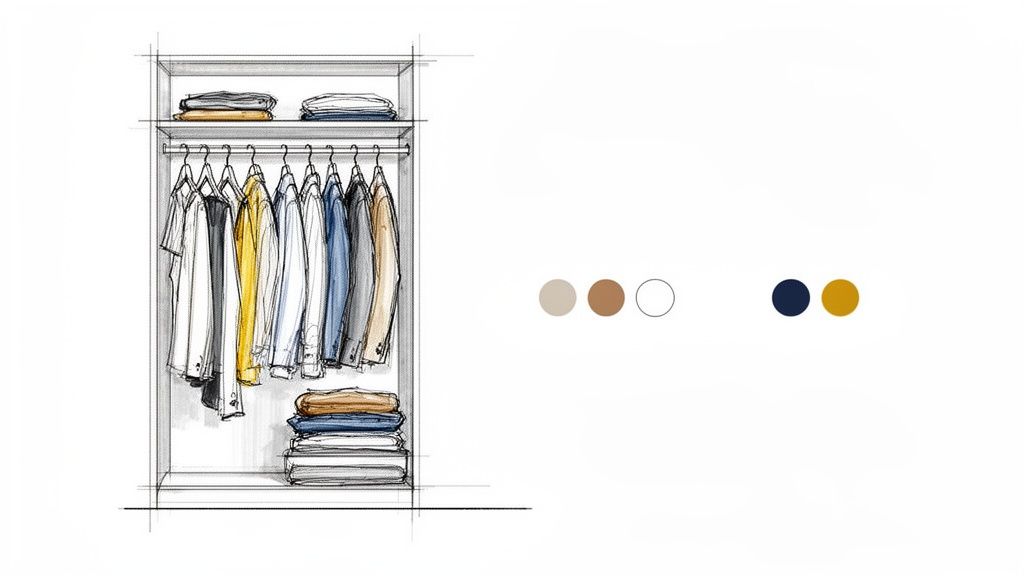
This strategy involves building a functional wardrobe of around 30-50 essential pieces per season, including clothing, shoes, and outerwear. The key is selecting items in a complementary color palette that reflect your personal style and lifestyle needs. By focusing on timeless basics and a few select accent pieces, you create a highly efficient closet where getting dressed is effortless and enjoyable. This is perfect for professional women, frequent travelers, or anyone seeking a more sustainable relationship with fashion.
Actionable Tips for Success
- Establish a Base: Start with a foundation of neutral colors like black, white, navy, and beige. These shades provide maximum versatility and act as the backbone of your wardrobe.
- Add Accent Colors: Choose two or three accent colors that you love and that flatter your skin tone. These will add personality and interest to your outfits.
- Invest in Quality: Since you'll have fewer items, prioritize well-made, classic pieces that will stand the test of time. Focus on items you can see yourself wearing at least 30 times.
- Photograph Your Outfits: As you create combinations you love, snap a quick photo. This creates a personal lookbook you can reference for quick inspiration on busy mornings.
The process of curating a capsule wardrobe is a journey, not a race. To get started on your own minimalist closet, you can learn more about how to build a capsule wardrobe from scratch and define your core style.
3. Color-Blocking Organization
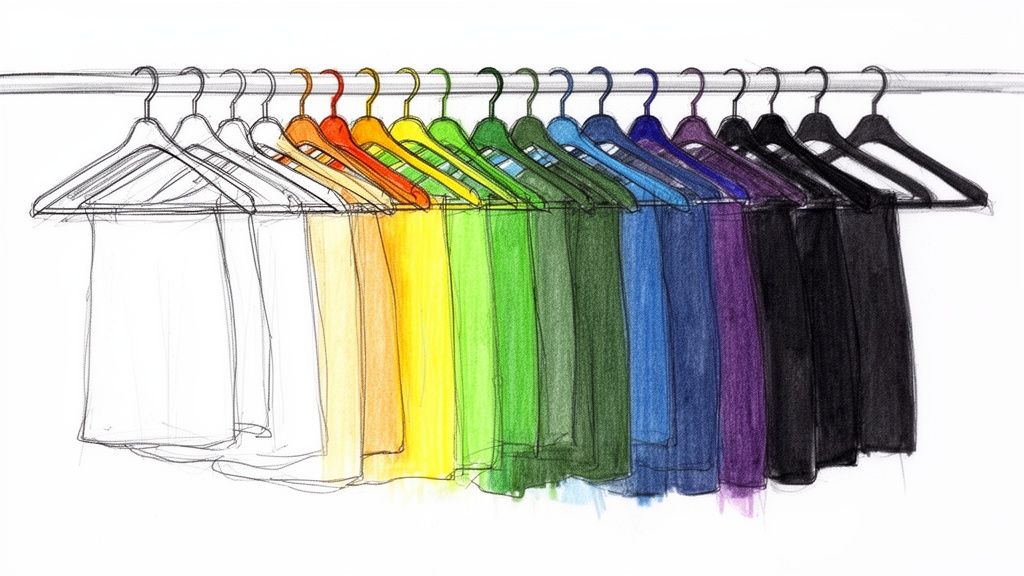
Color-blocking is an aesthetic and highly functional organization method that arranges clothing by color family. This approach is one of the best ways to organize your closet because it serves a dual purpose: it creates a visually stunning, boutique-like look while simplifying the process of building outfits. By arranging items in a color gradient, you can instantly see all your options within a specific shade, making coordination effortless and inspiring.
How It Works
This method involves grouping all your clothes first by type (e.g., shirts, pants, dresses) and then arranging each category by color. The typical flow follows the ROYGBIV rainbow spectrum, starting with whites and creams, moving through reds, oranges, yellows, greens, blues, and purples, and ending with browns, grays, and blacks. This visual catalog allows you to quickly locate specific pieces and assess your wardrobe's color palette at a glance.
Actionable Tips for Success
- Follow the Rainbow: Use the standard rainbow order (red, orange, yellow, green, blue, indigo, violet) as your guide, bookending it with neutrals like white, gray, and black.
- Use Matching Hangers: For a clean, cohesive look, switch to thin, matching hangers. This uniformity eliminates visual clutter and allows the colors of your clothing to stand out.
- Group Tones Together: Within a single color, arrange items from lightest to darkest. For example, place all your blue items together, starting with baby blue and transitioning to navy.
- Prioritize Placement: Put the colors you wear most frequently at eye level and in the most accessible part of your closet for maximum convenience.
4. Category-Based Organization
Category-based organization is a classic and highly effective system for arranging your wardrobe. It’s one of the best ways to organize your closet because it mirrors the logical way we think about getting dressed, grouping all similar items together. This systematic approach transforms your closet into a personal boutique, where you can easily find exactly what you need without a frantic search.
How It Works
The core principle is simple: sort every piece of clothing into distinct categories. Start by creating broad groups like tops, bottoms, dresses, jackets, and accessories. Then, you can drill down further within each category. For example, your "tops" section can be subdivided into T-shirts, blouses, sweaters, and tank tops. This method creates a clear, visual map of your entire wardrobe, making outfit planning and inventory management a breeze.
Actionable Tips for Success
- Define Clear Categories: Start with broad categories (tops, pants, skirts) and then create specific subcategories (long-sleeve tops, short-sleeve tops; jeans, trousers) to suit your wardrobe.
- Use Visual Cues: Employ matching hangers for a streamlined, cohesive look. Use shelf dividers to keep folded stacks of sweaters or jeans neat and separate.
- Prioritize Accessibility: Place the categories you wear most often, like work blouses or casual T-shirts, at eye level and in the most accessible part of your closet.
- Rotate Seasonally: Keep off-season categories stored away. This frees up prime closet real estate for the clothes you’re currently wearing.
This method is especially useful for those with larger wardrobes, as it helps you see exactly how many items you own in each category. It pairs beautifully with curated items, allowing a special piece like a designer-inspired handbag to stand out in a well-organized accessories section.
5. Seasonal Rotation System
The Seasonal Rotation System is a practical approach to closet management that involves storing off-season clothing elsewhere, leaving only current, weather-appropriate items in your primary closet. This is one of the best ways to organize your closet if you live in a region with distinct seasons, as it instantly creates more space and reduces daily decision fatigue. By limiting your view to only what's wearable now, you make getting dressed faster and your closet feel less overwhelming.
How It Works
This method is built on a simple cycle: at the start of each new season, you swap out your clothes. For example, as spring arrives, heavy winter coats, wool sweaters, and boots are cleaned and packed away. In their place, you bring out your lighter jackets, blouses, and sandals from storage. This swap not only keeps your main closet highly functional and relevant but also provides a natural opportunity to declutter and assess your wardrobe four times a year.
Actionable Tips for Success
- Store Items Clean: Always wash or dry-clean garments before storing them. This prevents stains from setting and deters pests.
- Use Clear, Labeled Bins: Store off-season items in clear containers or use detailed labels so you can easily identify what’s inside without unpacking everything.
- Maximize Space with Vacuum Bags: For bulky items like puffers and heavy blankets, vacuum-sealed bags can drastically reduce the amount of storage space needed.
- Schedule Your Swap: Put rotation dates on your calendar (e.g., the first week of October for fall/winter) to turn it into a consistent, manageable routine. This is also the perfect time to identify gaps in your wardrobe for the upcoming season.
6. Outfit Coordination and Styling Method
The Outfit Coordination and Styling Method transforms your closet from a simple storage space into a functional, ready-to-wear gallery. This is one of the best ways to organize your closet for efficiency, as it focuses on pre-planning complete outfits rather than just storing individual items. It eliminates morning decision-making, ensures every piece has a purpose, and helps you maximize the versatility of your wardrobe.
How It Works
This advanced approach involves grouping clothing, shoes, and accessories into specific, coordinated ensembles. Instead of searching for a top and then pants, you simply grab a pre-styled set. You can physically group these outfits together in your closet or digitally catalog them using a styling app. This method is perfect for busy mothers, professionals, and anyone looking to streamline their daily routine without sacrificing style.
Actionable Tips for Success
- Document Your Looks: Photograph your favorite completed outfits and save them in a dedicated album on your phone for quick reference.
- Use Planning Apps: Tools like Stylebook or Cladwell can help you digitally mix and match items and plan your outfits for the week ahead.
- Group Items Physically: Use multi-item hangers or clothing tags to keep complete outfits together, making them easy to grab on busy mornings.
- Anchor with Statement Pieces: Build several outfits around a single, versatile statement piece, like a patterned blazer or a signature necklace, to see how many ways you can wear it.
This method not only simplifies your mornings but also helps you better understand your wardrobe and define your personal style by seeing how individual pieces work together.
7. Vertical Hanging and Display Method
The Vertical Hanging and Display Method transforms your closet from a simple storage space into a curated gallery of your favorite pieces. Inspired by high-end retail boutiques, this is one of the best ways to organize your closet because it maximizes vertical space and keeps every item visible and accessible. This approach prevents wrinkles, showcases your wardrobe, and creates a visually stunning, boutique-like experience every time you get dressed.
How It Works
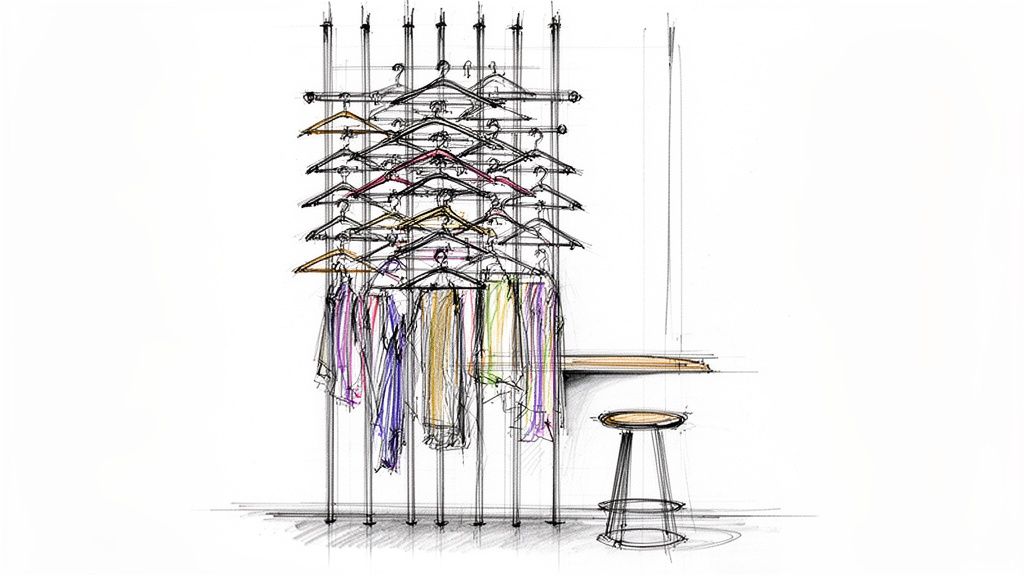
This method focuses on using hanging rods, cascading hangers, and tiered systems to utilize the full height of your closet. Instead of stuffing items into drawers or deep shelves, you hang as much as possible, organizing garments by category, color, and occasion. The goal is to create clean lines and an open feel, making it easy to see what you own and put together outfits without rummaging. It's particularly effective for fashion-conscious individuals who want to care for and display their high-quality garments.
Actionable Tips for Success
- Invest in Uniform Hangers: Switch to slim, non-slip velvet or elegant wooden hangers. Using the same style creates a cohesive, streamlined look and saves significant space.
- Utilize Cascading Hangers: These special hangers allow you to vertically layer multiple items, like pants or skirts, in the space of a single hanger. They are perfect for grouping similar pieces or entire outfits.
- Add Another Rod: If your closet allows, install a second hanging rod below the primary one to double your hanging capacity for shorter items like shirts, skirts, and blazers.
- Install Strategic Lighting: Good lighting is key to a display-style closet. Consider adding LED strip lights under shelves or a motion-activated puck light to illuminate your collection.
8. Frequency-Based Access Organization
This practical system is one of the best ways to organize your closet for pure efficiency. Instead of grouping by item type or color, you arrange your clothing based on how often you actually wear it. It’s a pragmatic approach that prioritizes convenience, ensuring your go-to pieces are always within easy reach, which is perfect for busy women and mothers who need to get dressed quickly.
How It Works
The core principle is simple: your most frequently worn items get prime real estate, while less-used and special occasion pieces are stored further away. Everyday essentials like your favorite jeans, versatile tops, and work staples are placed at eye-level and at the front of your closet. Items you wear less often, such as formal dresses or seasonal outerwear, are kept on higher shelves, in the back, or in under-bed storage. This method streamlines your daily routine by eliminating the need to search through clothes you rarely choose.
Actionable Tips for Success
- Conduct an Honest Audit: Before organizing, track what you wear for a few weeks to get a realistic picture of your habits. The "hanger trick" is great for this: turn all your hangers backward and only flip them forward after wearing an item.
- Create Zones: Designate a highly accessible "high-frequency zone" at the front of your closet for daily and weekly items. Create secondary zones for items worn monthly or seasonally.
- Establish a Special Occasion Section: Keep formalwear and sentimental items together in a dedicated, out-of-the-way spot, perhaps in a garment bag to protect them.
- Review and Adjust Quarterly: Your lifestyle and the seasons change, and so will your clothing rotation. Re-evaluate your frequency zones every few months to keep the system effective.
9. Zone-Based Multi-Purpose Organization
For those juggling multiple roles, like a professional, a mom, and a fitness enthusiast, zone-based organization is one of the best ways to organize your closet. This sophisticated method moves beyond simple categories like "shirts" or "pants" and divides your closet into distinct zones based on your lifestyle needs. It’s about creating mini, purpose-driven wardrobes within your main closet, making it seamless to get dressed for any occasion.
How It Works
This system involves designating specific areas of your closet for different parts of your life. For example, you might create a "work zone" with professional attire, a "weekend zone" for casual wear, a "workout zone" for activewear, and a "special occasion zone" for formal events. Each zone contains complete outfitting options, including relevant accessories, so you can grab everything you need for a specific activity from one dedicated spot. This approach brings logic and efficiency to a diverse wardrobe.
Actionable Tips for Success
- Identify Your Zones: Start by listing your 3-5 primary life categories. A working mother might have zones for office, errands, evening, and fitness.
- Create Physical Divisions: Use closet dividers, different colored hangers, or even separate rods to visually and physically separate each zone. This makes finding what you need effortless.
- Stock Each Zone Completely: Ensure each zone is self-sufficient. Your work zone should have blazers, blouses, trousers, and work-appropriate accessories ready to go.
- Prioritize Placement: Put your most frequently used zone, like your daily work or casual wear, in the most accessible, prime real estate of your closet.
10. Hanger Direction and Reverse Hanger Method
The Reverse Hanger Method is a simple yet brilliant tracking system that offers a clear, visual representation of what you actually wear. This approach is one of the best ways to organize your closet because it provides undeniable data on your wardrobe habits. By making neglected items immediately obvious, it helps you make objective decluttering decisions based on real-world use rather than sentiment alone.
How It Works
This technique involves turning all the hangers in your closet so the hook faces backward, away from you. After you wear an item and return it to the closet, you hang it back up with the hanger facing the correct, forward direction. Over a set period, you will see a clear division between the hangers that have been turned forward (items you’ve worn) and those still facing backward (items you haven’t). This physical audit takes the guesswork out of identifying closet clutter.
Actionable Tips for Success
- Set a Timeline: Commit to a specific tracking period, like 60 days, six months, or even a full year to account for all seasons.
- Start Fresh: Begin by turning every single hanger in your closet backward. Consistency is key for accurate results.
- Be Honest: Resist the temptation to turn a hanger forward if you only tried an item on but didn't actually wear it out.
- Assess and Act: At the end of your timeline, critically evaluate the clothes still on backward hangers. This data can guide you to donate or sell pieces you clearly aren't using.
Using this method helps you identify which clothes truly earn their space, making it easier to invest in quality pieces you know you will love and wear. For instance, after decluttering, you can confidently select a new, versatile handbag or accessory from Lenny Lane that complements your proven core wardrobe.
Top 10 Closet Organization Methods Comparison
| Method | 🔄 Implementation complexity | ⚡ Resource requirements / Efficiency | 📊 Expected outcomes (impact) | 💡 Ideal use cases | ⭐ Key advantages |
|---|---|---|---|---|---|
| The KonMari Method | High 🔄 — intense single overhaul | Medium ⚡ — time + emotional effort | Deeply curated, long-lasting wardrobe — ⭐⭐⭐⭐ 📊 | Those seeking mindful minimalism and clear personal style | Creates intentional wardrobes; reduces daily decisions |
| Capsule Wardrobe Strategy | Medium 🔄 — planning & selection | High ⚡ — upfront investment in quality | Versatile, cohesive outfits with fewer items — ⭐⭐⭐⭐ 📊 | Minimalists, frequent travelers, professionals | Maximizes combinations; sustainable, polished style |
| Color-Blocking Organization | Medium 🔄 — initial arrange + upkeep | Low ⚡ — time and matching hangers | Visually cohesive closet; easier color pairing — ⭐⭐⭐ 📊 | Visual organizers, boutiques, influencers | Aesthetic appeal; reveals palette gaps |
| Category-Based Organization | Low–Medium 🔄 — straightforward sorting | Low ⚡ — minimal supplies/time | Clear inventory and fast retrieval — ⭐⭐⭐ 📊 | Families, shared closets, large wardrobes | Highly practical; prevents duplicate purchases |
| Seasonal Rotation System | Medium–High 🔄 — scheduled swaps | High ⚡ — storage space & containers | More usable space and better garment care — ⭐⭐⭐ 📊 | People in distinct climates; owners of seasonal pieces | Maximizes space; protects off-season items |
| Outfit Coordination & Styling | High 🔄 — time‑intensive planning | Medium ⚡ — time/apps for documentation | Eliminates morning decisions; higher outfit use — ⭐⭐⭐⭐ 📊 | Busy women, mothers, style-focused individuals | Ensures pieces are worn; boosts outfit versatility |
| Vertical Hanging & Display | Medium 🔄 — install & arrange | Medium–High ⚡ — quality hangers/fixtures | Full visibility; fewer wrinkles; showpiece closets — ⭐⭐⭐ 📊 | Small closets, boutiques, display-minded users | Space-efficient visibility; showcases items |
| Frequency-Based Access | Low–Medium 🔄 — audit + placement | Low ⚡ — tracking time only | Faster daily dressing; highlights core pieces — ⭐⭐⭐ 📊 | Busy people, limited space, efficiency seekers | Time-saving; identifies high-value items |
| Zone-Based Multi-Purpose | High 🔄 — design & zoning effort | High ⚡ — space, dividers, possible duplicates | Seamless dressing for distinct roles/occasions — ⭐⭐⭐⭐ 📊 | Women with varied lifestyle demands, working mothers | Context-specific readiness; reduces decision friction |
| Hanger Direction (Reverse Hanger) | Low 🔄 — very simple process | Very Low ⚡ — no extra materials | Clear data on wear; easy decluttering decisions — ⭐⭐⭐ 📊 | Wardrobe auditors, minimalists, KonMari users | Extremely low-cost; evidence-based pruning |
Crafting Your Perfect System for Lasting Order
Embarking on a closet organization project can feel monumental, but the journey from chaos to clarity is paved with intentional, strategic choices rather than a single, magical solution. We’ve explored a comprehensive toolkit of methods, from the emotional reset of the KonMari Method to the ruthless efficiency of the Reverse Hanger trick. The true secret to success isn't just picking one strategy, but thoughtfully blending them to create a personalized system that genuinely supports your lifestyle.
The best ways to organize your closet are dynamic and adaptable. For the busy mother, this might mean combining Zone-Based Organization for kids’ clothes and personal items with a practical Seasonal Rotation System to keep daily choices simple. A fashion-forward professional might thrive by using the Capsule Wardrobe Strategy for her work attire while employing vibrant Color-Blocking for her weekend and evening wear to spark creativity. The key is to see these ten methods not as rigid rules, but as flexible building blocks for your ideal wardrobe sanctuary.
Synthesizing Your Strategy for Lasting Success
Your closet is more than just a storage space; it's the launchpad for your day. The right organizational system reduces decision fatigue, empowers your personal style, and brings a sense of calm to your daily routine. Think of it as an ongoing conversation with your wardrobe.
Key takeaways to build upon:
- Start with a Purge: No system will work in a closet overflowing with items you don't love or wear. Methods like KonMari or the Reverse Hanger trick are essential first steps to create a foundation of curated items.
- Prioritize Accessibility: The Frequency-Based Access and Category-Based Organization methods are crucial for ensuring your most-used items are always within easy reach. This simple principle is the cornerstone of a functional space.
- Embrace Visual Harmony: Whether through Color-Blocking or the sleek uniformity of Vertical Hanging, a visually appealing closet is more motivating to maintain. When your space looks good, you'll be more inspired to keep it that way.
Ultimately, the structure you build within your closet should be a direct reflection of your life's demands and aesthetic desires. The physical structure of the closet itself plays a foundational role in this process. Thoughtfully designed wardrobes for the bedroom can provide the ideal canvas, with customized shelving, drawers, and hanging space that make implementing these organizational strategies far more effective. A well-designed wardrobe is the architectural partner to your organizational system, ensuring every inch of space is optimized for peace and efficiency.
Your perfect system is one that feels intuitive and sustainable. Be patient with yourself, allow for adjustments as seasons and life circumstances change, and celebrate the progress you make. By implementing and combining these powerful organization techniques, you're not just cleaning a closet; you’re investing in a more streamlined, stylish, and serene future, one hanger at a time.
Ready to complete your newly organized space with accessories that are as functional as they are beautiful? Discover the curated collection at Lenny Lane, where you'll find elegant jewelry holders, stylish catch-all trays, and other home decor essentials that add the perfect finishing touch. Elevate your closet and your style at Lenny Lane.