


How to Organize Kids Toys Without Losing Your Mind
Let's be real—staring at a mountain of toys can feel completely paralyzing. It’s that feeling of, "Where do I even begin?" that stops so many of us in our tracks. But here’s the secret I’ve learned over years of tackling this exact problem: forget about the perfect bins and cute labels for now.
The single best thing you can do to conquer the toy chaos is to start with what I call the Big Sort.
It’s simple. Gather every single toy from every nook, cranny, and forgotten corner of your house and put it all in one central spot. The living room floor is perfect for this.
Yes, it will look like a toy store exploded. And yes, that's the point. This isn't about decluttering just yet—it's about getting a crystal-clear picture of exactly what you’re working with. You can’t organize what you can’t see. This one step transforms that overwhelming, chaotic mess into a manageable inventory.
Tackling the Toy Pile
Once you’ve got your giant pile, it's time to create some simple, logical groups. Don't overthink it! The goal is to make broad categories that even your toddler can understand.
Here’s what this usually looks like in my house:
- Building Things: All the LEGOs, Magna-Tiles, and wooden blocks go here.
- Figures & Friends: Every Barbie, superhero, dinosaur, and their sidekicks.
- Get Creative: Crayons, markers, paint, play-doh, and all those half-finished craft kits.
- Things That Go: Matchbox cars, big trucks, and Thomas the Tank Engine all live here.
- Games & Puzzles: Every single board game and puzzle, stacked up.
This is the exact process I try to follow every time things get out of hand.
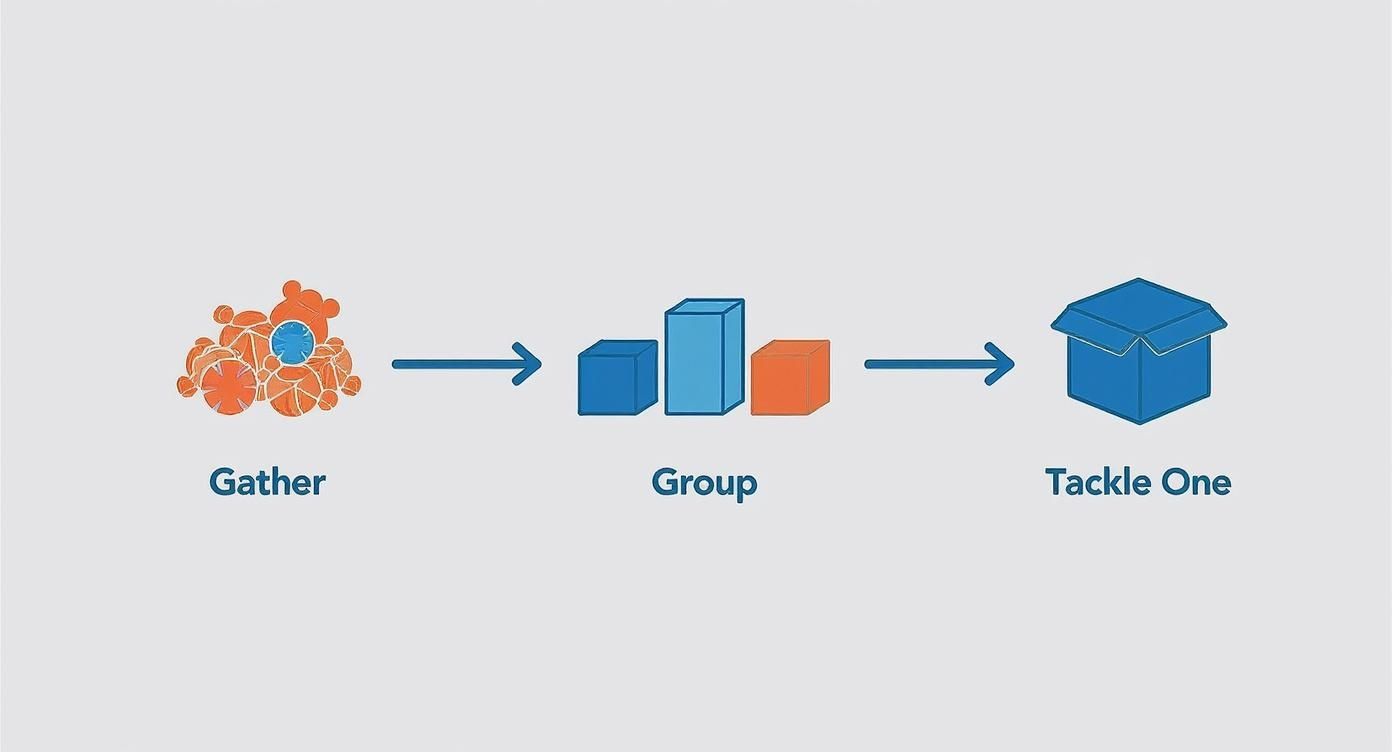
Breaking it down like this—Gather, Group, and then Tackle One Category at a Time—makes the whole project feel so much less daunting.
For a really deep dive into how to reclaim your living space from the toy takeover, check out this comprehensive guide on how to organize kids' toys. It's packed with great ideas.
Before you get started on the actual decluttering part, here's a quick cheat sheet for that initial sorting phase. It really helps to have a clear plan.
The 'Big Sort' Method At-a-Glance
| Step | Action | Why It Works |
|---|---|---|
| 1. Gather Everything | Bring every toy into one central, open space. No exceptions! | It forces you to see the true volume and prevents you from missing hidden stashes. |
| 2. Create Broad Piles | Group items into simple categories (e.g., blocks, dolls, cars). | This simplifies the chaos into manageable chunks without getting bogged down in tiny details yet. |
| 3. Involve the Kids | Frame it as a fun activity, like running a toy store for a day. | It teaches them organization skills and gives them a sense of ownership over their things. |
Once you've got your piles, you're ready to move on to the next phase: deciding what stays and what goes.
It's a Team Sport
Seriously, get your kids involved right from the start! I know it sounds like it might slow you down, but it’s so important for long-term success. If they help create the system, they’re way more likely to actually help maintain it.
And let's be honest, we need all the help we can get. The toy market is massive—it was valued at around $340.21 billion recently. A huge chunk of that, about 35%, is licensed toys from movies and shows. That means more themed sets with tons of tiny, specific pieces that are a nightmare to keep track of! Making this a family skill is more critical than ever.
Learning How to Let Go and Declutter Toys
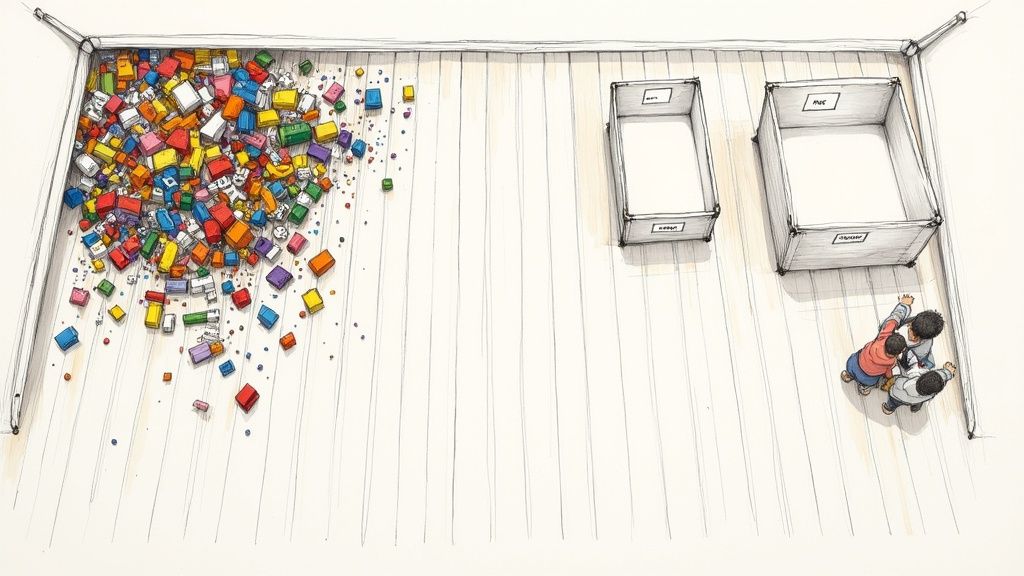
Okay, you’ve sorted all the toys into categories. Deep breath. Now comes the hardest—but honestly, the most rewarding—part of this whole process: the actual decluttering.
This isn’t just about tossing stuff. It’s about being thoughtful and intentional with what stays. The real goal is to create a space that actually encourages creative, meaningful play instead of just overwhelming your kids (and you!).
My go-to strategy for this is the Four-Box Method. It’s super simple, very visual, and it makes those in-the-moment decisions so much easier. All you need are four boxes or bins. Label them: Keep, Donate, Trash, and Relocate.
As you and your little one tackle each pile, every single item goes into one of those four boxes. That "Relocate" box is my secret weapon. It’s for all those random things that somehow ended up in the playroom—like the kitchen tongs that became a dinosaur grabber or the craft supplies that need to find their way back to the art cabinet.
Think of it like building a capsule collection for their playtime, a concept we dive into in our guide on how to build a capsule wardrobe.
Making Tough Decisions Together
Let’s be real, the emotional side of letting go is a huge hurdle, especially with kids. If you just ask, "Do you want to get rid of this?" you’re almost guaranteed to get a hard "No!"
I’ve had much better luck with gentler, more open-ended questions. Try one of these:
- "When was the last time you played with this one?"
- "Does this toy still feel fun for a big kid like you?"
- "I wonder if another little boy or girl would have a lot of fun with this now?"
- "Where should we put this so we can find it next time we want to play with it?"
These kinds of questions totally shift the focus. You’re not taking something away; you’re making room for new adventures and teaching them about giving to others.
A key part of decluttering is reframing the process for your child. It’s not about losing toys, but about making space for their favorite toys to shine and be enjoyed more fully.
Evaluating What Stays
To keep things from getting too emotional, it helps to have some clear rules for what lands in the "Keep" pile. A toy should be in good condition, something they actually play with, and still right for their age.
Broken toys, puzzles with missing pieces, and things they've obviously outgrown are easy "no's."
It can get a little tricky with collectibles, which have totally exploded in the toy world. Collectible sales actually jumped by 35% globally in the first half of a recent year, with many families seeing them as little investments.
When you're sorting through these, ask yourself if they are truly cherished items or just part of a passing trend that’s now just adding to the clutter. It’s helpful to understand these toy market trends and how they can sneakily impact your home organization.
Right, you’ve sorted through the mountain of toys, and now you’re staring at the keepers. What next? The secret to a tidy playroom isn’t just about having less stuff; it’s about creating a storage system that your kids can actually use, not just one that looks good on Pinterest.
We’re talking about a system so simple a child can manage it all on their own. The idea is to make it incredibly easy for them to find what they want and, more importantly, put it back. When every toy has a designated "home," cleanup stops being a dreaded chore and turns into a simple matching game. This is huge for building their confidence and giving them a sense of ownership over their space.
Designing Storage Systems Kids Can Actually Use
A one-size-fits-all approach just doesn't fly here. What works for a seven-year-old is going to completely frustrate a toddler. You have to tailor the storage to their developmental stage if you want it to stick.
Age-Appropriate Storage Solutions
For toddlers and preschoolers, my mantra is low, open, and obvious.
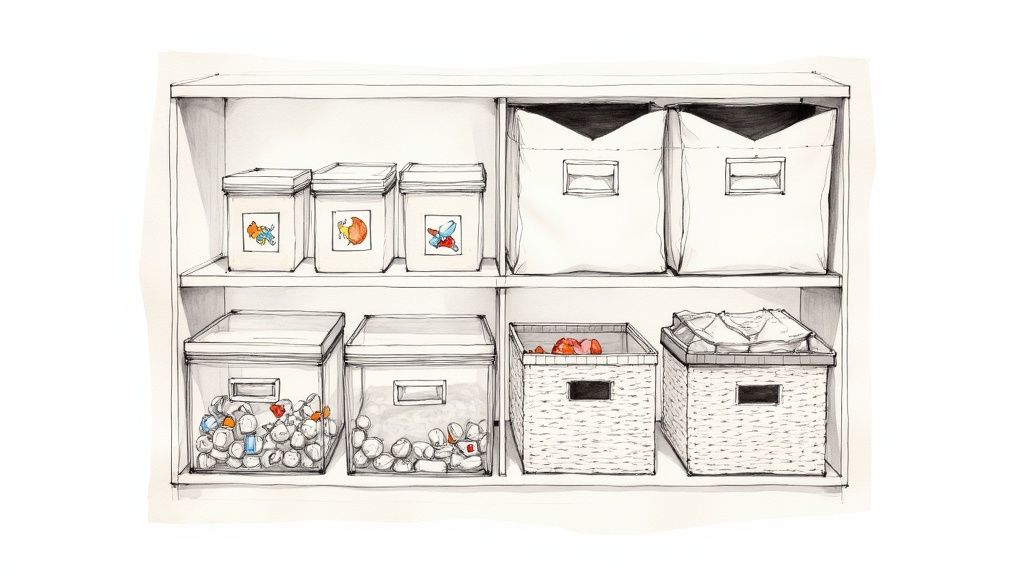
- Open-Front Bins: These are a total game-changer. Little ones can see exactly what’s inside and grab a toy without dumping the entire bin on the floor. It’s a win-win.
- Picture Labels: Your pre-reader can’t make sense of "Building Blocks," but they can definitely recognize a picture of them. Just tape a photo of the contents onto the front of the bin. It empowers them to clean up all by themselves, and it’s honestly the cutest thing to watch.
- Low Shelving: Keep their favorite, most-used toys on shelves they can easily reach. This encourages them to play independently and put things away when they're done.
As they get older, the system can evolve with them. For a deeper dive into creating functional spaces that last, check out these smart kids bedroom organization ideas for more strategies.
Practical and Stylish Toy Storage Ideas
Let's be real: organizing kids' toys shouldn't mean your home has to look like a preschool. There are so many beautiful ways to contain the chaos. For all those tiny, fiddly toy sets—I’m looking at you, Polly Pocket accessories and LEGO bits—zippered pouches or small, clear containers are lifesavers. Imagine all those puzzle pieces finally having a secure home!
For the bigger stuff, you can find storage that actually complements your home decor.
- Wicker Baskets: They’re perfect for corralling stuffed animals or blankets and add such a warm, natural texture to a living room.
- Cube Organizers: A classic for a reason! Use fabric bins to hide the smaller toys, and suddenly everything looks clean and uniform.
- Multi-Functional Furniture: Think storage ottomans or a window seat with built-in drawers. These pieces are amazing because they hide the clutter in plain sight.
The best organization system is the one with the least amount of friction. If it takes more than two steps for your kid to put a toy away, they probably won’t do it. Keep it simple!
These same ideas work wonders in smaller living areas, too. If you're trying to make the most of a tight space, our guide on clever dorm room storage solutions has some fantastic ideas that translate surprisingly well to kids' rooms. By picking storage that's both intuitive and attractive, you’re creating an environment where tidiness can actually become a habit.
Using Toy Rotation to Keep Playtime Fresh
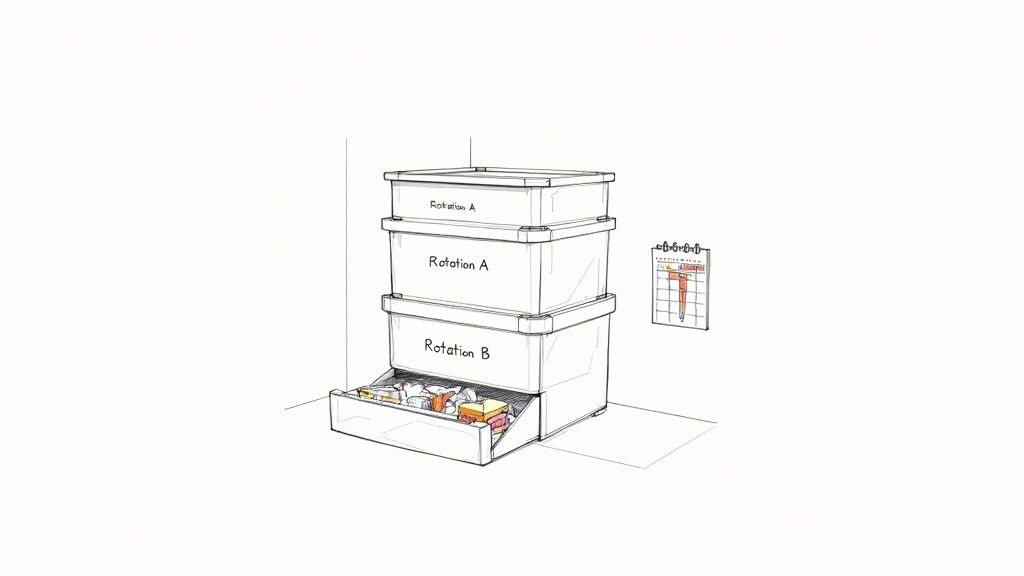
Okay, you've survived the great declutter and have a slick new storage system in place. High five! But what about keeping it that way? If you’re tired of the daily toy explosion and want to make old toys feel magical again, a toy rotation system is an absolute game-changer.
The idea is brilliantly simple: you keep a handful of toys out and pack the rest away. Every so often, you swap them. Suddenly, that forgotten bin of LEGOs is the most exciting thing in the world. It’s like a mini-Christmas morning, but with stuff you already own. Trust me, it works.
This isn't just a neat little parenting hack; it's practically a necessity these days. The North American toy market is massive—it pulled in $43.303 billion recently, making up 23.65% of the global total. And it's only growing. That means our homes are filling up faster than ever, so having a plan to manage the chaos is key to making sure those toys actually get played with. You can dive deeper into the numbers by checking out the full toy industry report if you're curious.
Setting Up Your Rotation System
Getting a rotation going is way easier than it sounds. Start by splitting that "keep" pile from your decluttering marathon into three or four smaller groups. The trick is to make each group balanced.
Think of it like packing a toy-themed lunchbox. Each bin could have:
- Something for building (like Magna-Tiles or a set of wooden blocks)
- Something for imagination (dress-up clothes, animal figurines)
- A puzzle or a simple board game
- A few cars, dolls, or action figures
You want variety in every set. Stash the "away" toys in bins you can't see through—out of sight, out of mind! I hide mine in a high-up closet shelf, which makes the big reveal feel like a real event.
You're not depriving your child by limiting their choices. You're actually doing the opposite. Fewer options help them focus, encouraging deeper, more creative play with what's in front of them.
Finding Your Rotation Rhythm
So, how often should you do the big swap? Honestly, there’s no magic number. It all comes down to your family’s vibe. Some people love a fresh set of toys every week, while others find that a monthly or even seasonal rotation is way more manageable.
A little tip from my own experience: the perfect time to rotate is when you notice your kid getting bored or antsy with their current stuff. It's also a brilliant move to do it right before a birthday or holiday when you know a new wave of toys is about to hit. It clears the decks and builds excitement.
We like to make "New Toy Day" a whole thing. We unbox the rotated toys together, and it’s so fun to watch them rediscover old favorites. This one simple habit is hands-down one of the best ways to keep the playroom organized and playtime fun.
Toy Rotation Schedule Examples
Trying to figure out the right frequency for your family? This little chart breaks down the most common schedules to help you decide what might work best for your home.
| Rotation Frequency | Best For | Pros | Cons |
|---|---|---|---|
| Weekly | Toddlers & preschoolers with short attention spans; small toy collections. | Keeps things constantly fresh; easy to manage with fewer toys. | Can feel like a constant chore; might be too frequent for some kids. |
| Bi-Weekly | Families looking for a happy medium between constant change and stability. | A good balance of novelty and routine; less demanding for parents. | Might not be frequent enough for kids who bore easily. |
| Monthly | School-aged kids with longer-term projects; larger toy collections. | Less work for parents; kids have time for deep play with each set. | Kids might "forget" about stored toys; can be a bigger job to swap. |
| Seasonally | Families with holiday-specific or outdoor toys; minimalist households. | Aligns with natural changes; makes seasonal toys feel special. | Long gaps can make toys feel completely unfamiliar; requires significant storage space. |
There's no right or wrong answer here. Start with what feels easiest—maybe a monthly swap—and see how it goes. You can always adjust the schedule as you learn what your kids respond to and what fits into your own routine. The goal is less stress, not more
Building Tidy Habits to Maintain Order
Let's be real: creating a beautifully organized playroom is one thing, but keeping it that way is the real win. This is where we go from a big, one-time project to simple, everyday habits that actually stick.
The goal isn't a constantly perfect room (because, kids). It's about making tidiness a natural part of your family’s rhythm, not a constant power struggle. It's those small, consistent actions that stop the toy chaos from taking over again.
Making Cleanup a Fun Routine
The secret to getting kids on board with cleaning up? Make it a game, not a chore. When you ditch the stern commands and add a little fun, their whole attitude can change.
Here are a few simple ideas you could literally start tonight:
- The 10-Minute Tidy: Before bed, set a timer for ten minutes. Crank up some fun music and make it a family challenge to see how many toys you can get back in their "homes" before the timer goes off.
- The Cleanup Song: Come up with a silly song that means it's time to put things away. Singing together makes it feel like a team effort instead of a demand.
- Beat the Buzzer: Grab a kitchen timer and challenge your kids to get all the LEGOs in the bin or all the dolls on the shelf before it dings. A little friendly competition goes a long way.
Seriously, these little games can completely reframe how kids think about their responsibilities.
The best tidy-up habits are the ones you weave right into your daily schedule. By making cleanup a predictable part of the day—like right before dinner or as part of the bedtime routine—it just becomes automatic.
Proactive Strategies for Long-Term Order
To really stay ahead of the clutter, you need a few ground rules for managing the constant flow of toys coming into your house. It’s all about being proactive.
The one in, one out rule is a game-changer. When a new toy arrives for a birthday or holiday, an old one gets passed along or donated. This is such a practical way to teach kids about mindful consumption and generosity.
For instance, if a new stuffed animal joins the crew, it's the perfect time to chat about which friend might be ready for a new home. This helps you curate those truly special collections—like an adorable Mary Meyer rabbit—and give them the place of honor they deserve, without getting buried in fluff.
Common Questions About Organizing Kids Toys
Even with the best system in place, life happens. You hit a wall, things get messy again, and it feels like you're right back where you started. Trust me, it’s totally normal! Let’s talk through some of the biggest hurdles I hear from parents all the time and figure out some real, sanity-saving ways to get past them.How Do I Organize Toys in a Small Space
Living in a small apartment or a cozy house doesn't mean you're destined to live in a sea of plastic toys. It just means you have to get a little smarter about your space. The secret? Think up, not out, and make your furniture work harder.
- Go Vertical: Your walls are your best friend! Tall, skinny bookshelves or cube organizers can hold a crazy amount of stuff without eating up precious floor space. I also love using wall-mounted shelves to show off special toys or keep those tiny, delicate things safe from toddler hands.
- Utilize Hidden Spaces: Don't forget about that prime real estate under the bed or behind the couch. You can find some amazing low-profile bins on wheels that slide right in and out. They are absolutely perfect for bulky things like train sets or big tubs of blocks.
- Multi-Functional Furniture: Get pieces that do double duty. A storage ottoman is a genius move for hiding a mountain of stuffed animals while also giving you an extra seat. A coffee table with a shelf underneath or a few drawers is another game-changer.
Seriously, with just a few clever storage hacks, you can carve out a great play area no matter how many square feet you're working with.
What Do I Do with All the Gifts
Ah, the never-ending flood of gifts from grandparents and relatives who just want to show their love. It's so sweet, but it can completely derail all your decluttering progress in a hot second. Handling this without hurting anyone's feelings is all about a little gentle, forward-thinking communication.
It’s okay to set loving boundaries around gift-giving. Your peace of mind and an uncluttered home are more valuable than another plastic toy that will be forgotten in a week.
One of my favorite things to do is suggest experience-based gifts. Think a trip to the zoo, a museum membership, or tickets to a kids' concert. Those create memories that last way longer than any toy. If they really love giving physical gifts, you could set up a shared online wishlist with specific things you know your kid will actually play with and that fit your system. A simple, "We're really focusing on building our Magna-Tiles collection this year!" can work wonders.
How Do I Get My Family on Board
Okay, so you've got the vision, but your partner or kids just aren't seeing it. Getting everyone on the same team is absolutely critical if you want this to last. The trick is to focus on the awesome benefits for everyone, not just on the rules.
Instead of nagging, "You have to clean this up," try framing it differently. "Hey, let's put these blocks away so we have more room to build that epic fort!" When talking to a partner who isn't quite on board, I find it helps to point out how a tidier space means less stress for everyone and more time to just hang out as a family.
And get them involved from the very start! Let your kids pick out the color of their bins or help you print out the picture labels. When they feel like they have a say in it—a sense of ownership—they are so much more likely to help keep it up. Just remember, the goal is teamwork, not one person policing a perfect room. It’s all about building those good habits together, one small step at a time.
At Lenny Lane, we believe that a beautiful, organized home contributes to a happy life. Explore our collection of stylish storage baskets and home decor that can help you create a space you and your family will love. Find your perfect storage solution today at Lenny Lane