



Best Jewelry for Sensitive Ears: best jewelry for sensitive ears Options
If your ears throw a fit every time you wear a cute new pair of earrings, you're not alone. The secret to happy, pain-free lobes isn't some magic potion—it's all about the metal. For instant relief, you'll want to stick with high-quality, hypoallergenic options like implant-grade titanium, surgical stainless steel, or precious metals like 14k+ gold and platinum. These aren't just fancy names; they're chosen for their biocompatibility, which is just a technical way of saying they play nice with your body and won't cause a reaction.
Your Quick Guide to Pain-Free Earrings
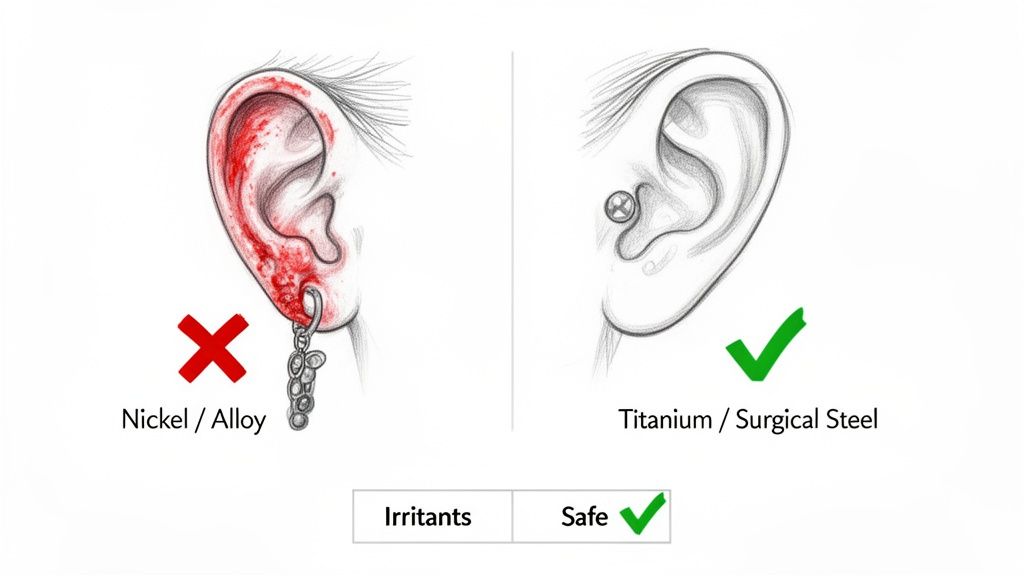
Tired of that tell-tale itch, redness, and swelling? You've come to the right place. Switching to earrings made from the right materials is a total game-changer. This isn't just about looking good; it's about understanding the science behind why some metals are friends and others are foes to your skin.
The main troublemaker behind most earring drama is nickel, a cheap metal that’s everywhere in fast-fashion jewelry. Think of your body as having a super-sensitive security system. When it detects nickel, it panics, thinking it's under attack. That inflammatory response is what leaves your ears feeling sore and angry.
Choosing Safe Metals Over Irritants
To stop the cycle, you have to become a savvy shopper. It's all about learning to spot the good guys (soothing metals) from the bad guys (irritating ones). For instance, even something like sterling silver, which sounds safe, can have trace amounts of nickel that set off a reaction. True hypoallergenic metals create a safe barrier, keeping those pesky irritants away from your skin.
"Hypoallergenic" just means the jewelry is less likely to cause an allergic reaction. It's not a 100% guarantee. For anyone with super sensitive skin, going for the safest options like medical-grade titanium or surgical steel is always the best bet.
To make things super simple, I've put together a little cheat sheet to help you tell the heroes from the villains in the world of earring metals.
Hypoallergenic Metals At a Glance
Here’s a quick rundown of the most common metals you'll encounter, breaking down which ones are safe bets and which ones you should probably skip.
| Metal Type | Hypoallergenic Status | Best For | Potential Issues |
|---|---|---|---|
| Implant-Grade Titanium | Excellent (Nickel-Free) | New piercings and extreme sensitivities | Higher price point, limited styles |
| Surgical Steel | Very Good (Low Nickel) | Daily wear, durability, and affordability | May contain trace nickel; not for all |
| 14k+ Gold | Good | Classic style and long-term wear | Lower karats often contain nickel |
| Nickel Alloy | Poor (Common Irritant) | Not recommended for sensitive skin | High risk of itching, redness, and swelling |
| Brass/Copper | Poor | Not recommended for direct skin contact | Can cause green skin and allergic reactions |
Once you get the hang of these differences, you'll go from a frustrated buyer to a confident jewelry pro. This guide is all about giving you the knowledge to end the irritation for good, because wearing beautiful earrings should be fun, not a painful ordeal
Understanding Why Your Ears React to Certain Jewelry
Have you ever treated yourself to a new pair of earrings, only to have your earlobes turn red, itchy, and swollen just a few hours later? It’s a total bummer. That frustrating reaction isn't just random irritation; your body's defense system is actually trying to tell you something.
The most common culprit is a type of allergic reaction called contact dermatitis. You can think of your skin as a super-protective security guard. When it touches certain materials, it sometimes mistakes them for a threat and sounds the alarm. That "alarm" is the inflammation, itching, and redness that’s ruining your look.
The Main Offender: Nickel Allergies
In the jewelry world, the number one bad guy is nickel. It's a metal that gets mixed into alloys all the time to make jewelry stronger and cheaper, which is why you’ll find it in so many fast-fashion pieces. A nickel allergy is way more common than you might think, affecting a huge 10-20% of the population.
So what happens? When you wear an earring with nickel in it, your sweat can cause teeny-tiny metal particles to break free and get absorbed by your skin. If you have a sensitivity, your immune system totally overreacts to these nickel ions and launches a full-on attack. It’s just your body trying to protect you from what it thinks is a danger, even though the metal itself is harmless.
An allergic reaction to jewelry is basically a case of mistaken identity. Your immune system sees harmless nickel ions as a threat and goes into defense mode, leaving you with all those uncomfortable symptoms.
How Alloys and Plating Play a Role
It's really important to know that most jewelry isn't made from one single, pure metal. The majority of pieces are alloys, which are just mixtures of different metals. And this is where the problem often hides. A piece might say "gold" or "silver," but the metal underneath could be loaded with nickel.
Here’s a quick breakdown of what to watch out for:
- Low-Karat Gold: The purity of gold is measured in karats. Pure 24k gold is hypoallergenic, but it's way too soft for most jewelry. To make it more durable, it's mixed with other metals. A 10k gold earring has a lot more of those other metals (like nickel) than a 14k or 18k gold piece, making it much more likely to cause a reaction.
- Gold-Plated Jewelry: This is a big one. These pieces have a super thin layer of gold covering a base metal, which is often a nickel alloy. Once that plating inevitably wears off—and it always does—your skin is directly exposed to the irritant underneath.
When you're trying to figure out why your ears are so sensitive, it’s also a good idea to think about your skin's overall health. A strong, healthy skin barrier is your first line of defense against all kinds of irritants. If you want to learn more about keeping it in top shape, check out this guide to the best skin barrier repair products.
Now you know the basics! This is your first step toward finally ending that cycle of irritation. Once you realize the problem isn't your ears but the materials you're putting in them, you can go from being a frustrated shopper to a total pro. You'll know exactly what to look for and what to avoid, which is the key to building a collection of gorgeous earrings you can actually wear.
The Top Hypoallergenic Metals for Sensitive Skin
Trying to find cute earrings when you have sensitive skin can feel like a total minefield. One wrong move, and you're dealing with red, itchy, and just plain angry earlobes. But here's the good news: the fix is surprisingly simple. It really all comes down to choosing the right metal.
When you're shopping for the best jewelry for sensitive ears, you just need to get familiar with a handful of materials that are known for being biocompatible. That’s just a fancy way of saying they get along with your body and don't cause a fuss. Let's dive into the absolute best metals out there for happy ears.
Titanium: The Medical-Grade Hero
When it comes to pure safety, titanium is in a class all its own. This is the exact same stuff surgeons trust for medical implants—think joint replacements and bone screws. If it’s safe enough to be inside your body, you can bet it's safe enough for your earlobes.
Titanium is 100% nickel-free, making it the holy grail for anyone with extreme sensitivities or brand-new piercings. It’s also ridiculously lightweight, super strong, and won't corrode, so you never have to worry about it tarnishing. It might cost a little more upfront, but the peace of mind is totally worth it.
If you're curious about the science behind it, it's pretty interesting to read up on how our bodies react to titanium in all sorts of applications.
Surgical Stainless Steel: The Durable Champion
Surgical stainless steel is another amazing option, and it's usually a bit more budget-friendly. It’s a total workhorse—incredibly durable and resistant to scratches and tarnish, which makes it perfect for your everyday go-to pairs.
One thing to keep in mind, though: "surgical steel" can contain tiny, trace amounts of nickel. Now, for most people, this isn't an issue because the nickel is locked into the alloy and doesn't leach out. But if you have a severe nickel allergy, you might still have a reaction. Your safest bet is to look for specific grades like 316L or 316LVM, which are designed for body jewelry and have incredibly low nickel release rates.
This is a great little visual of how an irritant like nickel can set off that whole chain reaction.
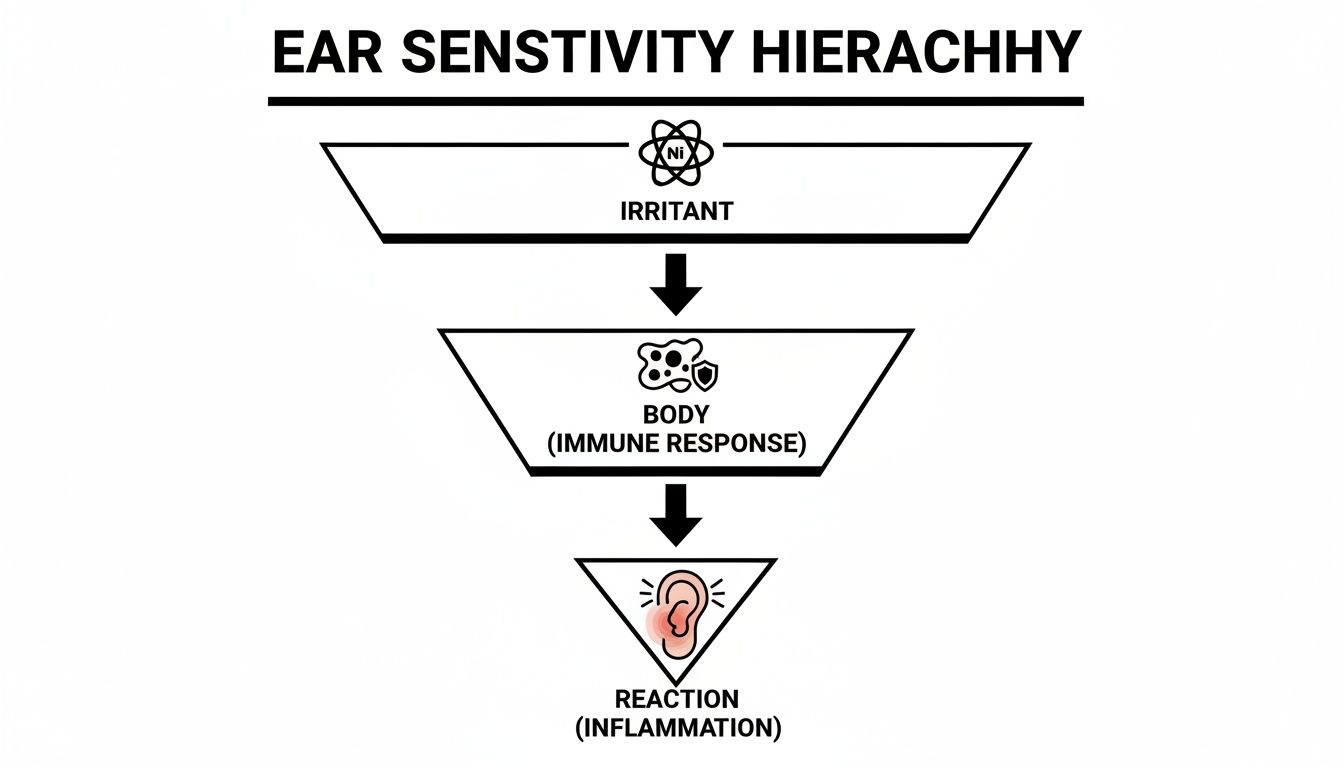
It’s pretty straightforward: the trigger (a metal like nickel) kicks your immune system into gear, and the result is that all-too-familiar inflammation.
Precious Metals: Platinum And High-Karat Gold
If you love the classic, luxe vibe of precious metals, you're in luck! Both platinum and high-karat gold are fantastic hypoallergenic choices. You get that timeless beauty without having to worry about irritation.
- Platinum: A lot like titanium, platinum is super pure and doesn't react with skin. It's naturally nickel-free, incredibly dense, and built to last, making it a premium choice for fine jewelry you'll have forever.
- High-Karat Gold: The key word here is "high-karat." Pure 24k gold is hypoallergenic, but it’s way too soft to be made into durable jewelry. So, it’s mixed with other metals to give it strength. The safest options are 14k or 18k gold, because they have a high percentage of pure gold and are less likely to contain cheap, irritating alloys. Definitely steer clear of 10k gold if you know you have sensitive skin.
Comparing The Top Hypoallergenic Metals
To make it even easier, here’s a quick-glance table breaking down the best options. This should help you pick the perfect metal based on what’s most important to you—whether it's budget, durability, or just pure peace of mind.
| Metal | Key Benefit | Durability | Typical Price Point | Best For |
|---|---|---|---|---|
| Titanium | 100% nickel-free, medical-grade | Extremely high | Mid to High | Extreme allergies, new piercings, everyday wear |
| Surgical Steel (316L) | Affordable & scratch-resistant | Very high | Low to Mid | Everyday wear, budget-conscious shoppers |
| Platinum | Naturally hypoallergenic & luxurious | Extremely high | Very High | Fine jewelry, special occasions, lifetime pieces |
| 14k-18k Gold | Classic look, widely available | High | High | Anyone who loves the look of gold without irritation |
| Gold-Filled | Affordable gold look, durable | High | Low to Mid | The look of solid gold on a budget, daily wear |
Choosing the right one really just depends on your personal needs and style. You really can't go wrong with any of these top contenders!
Gold-Filled Vs. Gold-Plated: What You Need To Know
Okay, this is probably one of the most important things to get straight when you're shopping. Gold-plated and gold-filled might sound similar, but in terms of quality and how your ears will react, they are worlds apart.
Gold-Plated: Think of this as a whisper-thin layer of gold zapped onto a base metal, which is usually cheap brass or a nickel alloy. That super thin layer can rub off really fast from just normal wear, exposing your skin to the irritating metal hiding underneath. It’s a recipe for disaster if you have sensitive skin.
Gold-Filled: This is a whole different ballgame. Gold-filled jewelry is made by pressure-bonding a thick, solid layer of gold to a base metal core. By law, that gold layer has to make up at least 5% of the item's total weight. We're talking about a layer that's literally hundreds of times thicker than standard gold plating.
Because that gold layer is so substantial, gold-filled jewelry is super durable, won't tarnish, and creates a safe, hypoallergenic barrier for your skin. It gives you the look and feel of solid gold at a much friendlier price point, making it a way, way better choice for anyone with sensitive ears.
Learning what to look for is half the battle, and you can keep learning by checking out our guide to the best jewelry for sensitive skin. Once you know which metals are your friends, you can shop with total confidence, knowing your ears will be happy and healthy.
How to Choose Earring Styles That Prevent Irritation
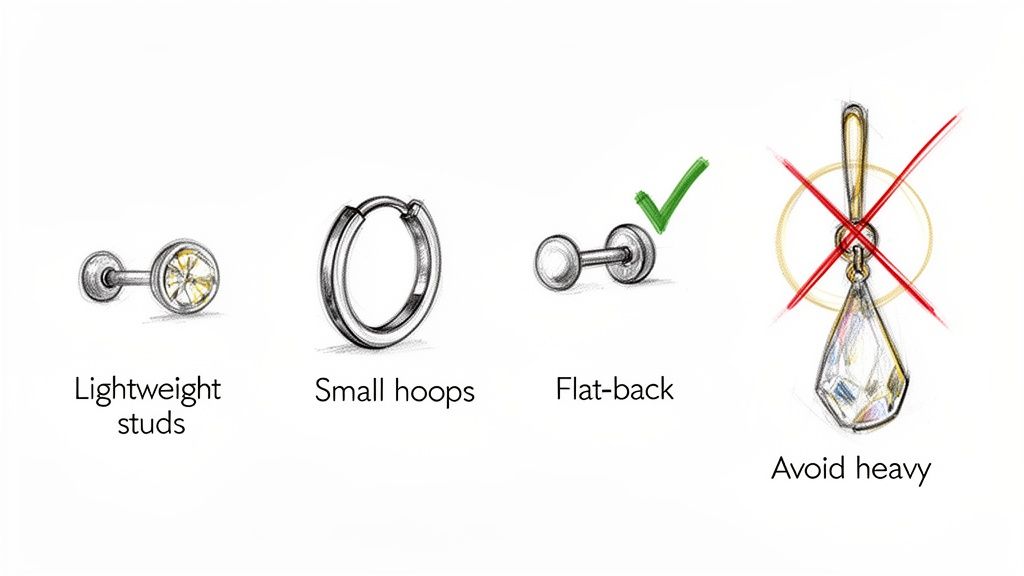
Picking a safe, hypoallergenic metal is a huge first step, but it’s only half the battle. The actual design of an earring—its weight, its shape, even the type of back it uses—plays a massive part in whether your ears feel great or totally miserable by the end of the day. You could have an earring made from pure, medical-grade titanium, but if the design is wrong, it can still cause a world of hurt.
Think of it like buying shoes. The right material (like buttery-soft leather) is a must, but if the shoe is too heavy or pinches your heel, you’re still getting blisters. It’s the exact same logic with your earrings. A smart style choice works together with the hypoallergenic metal to keep your ears happy.
Prioritize Lightweight and Low-Contact Designs
When in doubt, always go for styles that are light as a feather and don’t move around much. Heavy earrings, especially those gorgeous but weighty chandelier styles, put constant physical stress on your piercing. All that pulling and tugging can actually stretch the piercing hole and cause tiny micro-tears. This is basically an open invitation for bacteria and inflammation, even if you’re wearing a safe metal.
For everyday wear or for piercings that are still on the newer side, simple is always better. These are my go-to recommendations:
- Stud Earrings: These are the gold standard for comfort. They sit snug against your earlobe with almost no movement, which cuts down on friction and the risk of getting snagged on your hair or clothes.
- Small Hoops (Huggies): If you want a little more flair than a stud, close-fitting hoops (often called huggies) are perfect. They give you that hoop look without adding much weight or motion.
The goal is to minimize physical stress on your piercing. Lightweight studs and small hoops reduce the constant pulling and friction that can make even the most well-healed piercing feel sore and irritated over time.
Save those heavier, more dramatic earrings for special occasions where you’ll only have them in for a few hours. A short-term style statement is way more manageable than dealing with all-day discomfort. Wearing statement pieces is also a great time to learn how to layer jewelry with smaller, more comfortable earrings for a look that's both balanced and stunning.
The Overlooked Importance of Earring Backs
Okay, let’s talk about something most people completely ignore: the earring back. This tiny piece of metal can be a major source of trouble. The wrong back can pinch your skin, trap gunk and bacteria, or just fail to keep your earring secure.
We’ve all seen traditional butterfly backs. They’re everywhere, but honestly, they’re notorious for collecting a gross mix of skin cells, soap residue, and bacteria. All that buildup is a recipe for infection and irritation. Plus, the way they’re designed can sometimes squeeze the back of your earlobe, cutting off airflow and creating a damp little environment where bacteria love to party.
A much, much better choice is the flat-back labret stud. This style got its start in the body piercing world, but it’s becoming a favorite for regular lobe piercings, and for good reason. The flat disc sits completely flush against the back of your ear. No poking, no pinching. It's so comfortable you can even sleep in it. This design also lets your piercing breathe and is way easier to keep clean, which seriously slashes the risk of irritation.
A Smart Shopper's Guide to Hypoallergenic Jewelry
Trying to buy earrings for sensitive ears can feel like a total gamble, right? You see so many vague promises and confusing terms, and it’s way too easy to end up with yet another pair that leaves your lobes sore and angry.
The secret to breaking this cycle is to stop being a hopeful buyer and start being a savvy detective. Once you know what to look for, you can spot the genuinely safe pieces with total confidence. It’s all about shifting your focus from just the style to the actual substance of what you’re buying. This not only saves your ears but also makes sure you’re investing in quality jewelry that you can actually wear.
Decoding Product Descriptions
First things first, you need to get fluent in the language of safe metals. Let's be real, marketing phrases like "hypoallergenic" or "sensitive-skin friendly" don't mean much on their own. You need to hunt for the real-deal terms that prove quality and safety.
Here’s what you should be looking for in any product description:
- Specific Metal Grades: Keep an eye out for terms like "implant-grade titanium (ASTM F-136)" or "316L surgical stainless steel." These are actual industry standards that guarantee a certain level of purity.
- Gold Purity and Composition: If you're going for gold, the description should spell out whether it’s "solid 14k gold," "gold-filled," or "gold-plated." We already know that gold-filled is a much better and safer option than plated for sensitive skin.
- Explicitly Nickel-Free: The absolute best descriptions will come right out and say a piece is "100% nickel-free." That’s a way stronger promise than a generic "hypoallergenic" sticker.
When you start spotting these details, you can instantly filter out the junk and focus on the good stuff made with your comfort in mind.
Essential Questions to Ask Jewelers
Whether you're shopping in a boutique or online, don't ever be afraid to ask direct questions. A good jeweler who’s proud of their products will have zero problems giving you straight answers. If they get dodgy or seem unsure, that’s a huge red flag.
Here are the non-negotiable questions every smart shopper needs to ask:
- "Is this piece solid gold or plated?" For anything gold, this is your number one question. It immediately separates the quality pieces from the fast-fashion stuff.
- "If it's plated, what is the base metal underneath?" This question gets right to the point. Their answer will tell you if a nasty irritant like nickel or brass is hiding just below the surface, waiting to cause a reaction.
- "Do you guarantee that this is nickel-free?" Asking this directly forces them to give you a clear yes or no. It also shows you’re an educated customer who knows what’s up.
Remember, you are your own best advocate. Asking pointed questions empowers you to make an informed decision, ensuring that every new pair of earrings is a success, not a source of irritation.
With this little checklist in your back pocket, you’re all set to find pieces you’ll absolutely love. For instance, when you're browsing for your next favorite pair, like the gorgeous earrings available at Lenny Lane, you can use these exact principles to pick out high-quality, comfortable styles. Building this confidence is the final step on your journey to pain-free accessorizing
Essential Care Tips for Your Earrings and Ears
Okay, so you've found the perfect pair of hypoallergenic earrings. That's awesome! But the journey to happy ears doesn't stop there. Think of it like a new plant—you can’t just put it in a sunny spot and forget about it. A little regular care is what keeps things thriving.
Proper maintenance isn't just about keeping your jewelry shiny. It's really about stopping the buildup of bacteria, skin oils, and all that other gunk that can cause irritation, even with the safest metals. A simple, consistent routine is your secret weapon for comfort.
Creating a Gentle Cleaning Routine
First things first: you don't need harsh chemicals. I see so many people reach for rubbing alcohol or hydrogen peroxide, but those can be way too aggressive. They strip your skin's natural oils and can actually make irritation worse. The best approach is always a gentle one.
For cleaning your jewelry, keep it simple:
- Mild Soap and Water: A few drops of a gentle, fragrance-free soap in some warm water is honestly all you need for metals like titanium, surgical steel, and solid gold. It works wonders.
- Saline Solution: If you have new piercings or they're just feeling extra sensitive, a sterile saline solution is your best friend. It’s super gentle and perfect for wiping down both the earring and the piercing site.
Your goal is to get rid of bacteria and residue without messing up your skin’s delicate balance. Trust me, regular gentle cleanings are so much more effective than a rare, harsh scrub-down.
Smart Habits for Healthy Ears
Beyond just cleaning, a few small daily habits can make a huge difference in keeping flare-ups away. These are the little things that minimize physical stress on your earlobes and just create a healthier environment overall.
The biggest one? Always make sure your ears are completely dry before you put your earrings back in. A damp piercing is basically an invitation for bacteria to throw a party. After a shower, just a quick, gentle pat with a clean towel is all it takes. This one step is probably the easiest win for happy, healthy piercings.
Here are a few other game-changers:
- Give Your Ears a Break: It’s such a good idea to take your earrings out before bed. This lets your piercings breathe and stops the posts from poking or snagging on your pillowcase all night, which can be surprisingly irritating.
- Store Them Properly: Don't just toss your beautiful earrings on a dresser to collect dust. A clean, dry jewelry box or a soft pouch keeps them clean and also prevents scratches and other damage.
- Handle with Clean Hands: This sounds obvious, but we all forget! Always wash your hands before touching your earrings or your piercings. It really cuts down on transferring germs and oils from your fingers to your sensitive skin.
When you work these easy habits into your life, you're setting yourself up for totally irritation-free style. It means every piece of best jewelry for sensitive ears you invest in can be worn with the comfort and confidence you deserve.
Your Top Questions About Jewelry for Sensitive Ears, Answered
I get it. Even when you think you have a handle on what works for your sensitive ears, little questions pop up. It's totally normal to have some lingering "what ifs" floating around.
Let's tackle those nagging questions right now. This is your go-to guide for those tricky situations, so you can shop and wear your favorite earrings without a second thought.
Wait, Can I Suddenly Become Allergic to My Old Favorite Earrings?
Yes! This happens all the time, and it's so confusing. You've got that one pair you've loved and worn for years, and then bam—one day, they make your ears red and itchy. What gives?
It all comes down to how metal allergies work. They're a "delayed hypersensitivity," which means your body can build up a reaction over time. Your immune system, after years of being cool with a low-level irritant like nickel, might just decide it’s had enough. It's not in your head; your body has literally changed its mind.
Is Sterling Silver a Safe Bet?
This one is a little tricky. Pure silver is totally fine, but nobody makes jewelry out of it because it's way too soft. Sterling silver is actually an alloy, which just means it’s mixed with other metals to make it stronger.
Usually, that other metal is copper, which is okay for most people. But sometimes, to cut costs, manufacturers sneak some nickel into the mix.
My advice? Stick to high-quality sterling silver from sellers you trust. Always ask if it’s guaranteed to be nickel-free. If your ears are super, super sensitive, you might want to skip it altogether and go for something like titanium, which is pretty much foolproof.
Help! My Ears Are Having a Reaction. What Do I Do?
First thing's first: take the earrings out. Right now. Don't try to power through it, because that will only make the irritation worse and could even lead to an infection.
Once they're out, here's your game plan for getting things back to normal:
- Take 'Em Out: The second you feel that itch or see redness, remove the earrings.
- Clean the Area: Gently wash your earlobes with some mild soap and water. A sterile saline solution works great, too.
- Soothe the Itch: A tiny dab of over-the-counter hydrocortisone cream can be a lifesaver for calming down that inflammation.
- Give Them a Break: Let your piercings rest for a few days without any earrings until all the symptoms are gone.
Following these simple steps will calm things down quickly and get your ears back to being happy and healthy.
Ready to find a pair of earrings you can wear with total confidence? Check out the gorgeous, carefully selected collection at Lenny Lane, where every piece is as comfortable as it is stylish. Head over to https://www.lennylane.com to find your next favorite pair