



Best Jewelry for Sensitive Skin: Hypoallergenic Picks & Tips
If you've ever dealt with an itchy, red rash from a gorgeous new pair of earrings, you know the struggle is real. The best jewelry for sensitive skin is always made from hypoallergenic materials—think beautiful, safe metals like titanium, niobium, platinum, and high-karat gold (14k or higher).
These metals are amazing because they almost never contain nickel, which is the number one reason your skin gets irritated. This guide is all about helping you find stunning pieces you can actually wear without that dreaded itch.
Your Guide to Irritation-Free Style
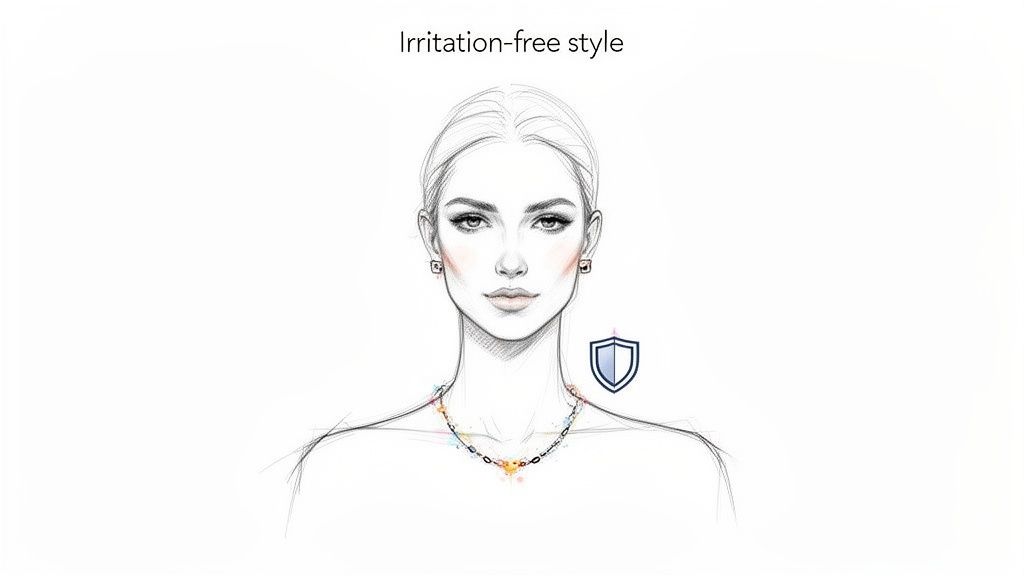
Trying to find beautiful jewelry that doesn't make your skin freak out can feel like a total treasure hunt. For so many of us, a new necklace or a cute pair of earrings brings on redness, itching, and rashes. It's so frustrating! It often feels like you have to pick between your style and your comfort, but I promise, you don't have to.
Just imagine putting on accessories that look amazing all day, without turning your skin into an itchy, irritated mess. That's the dream, right? And it's a reality for millions of people with sensitive skin who are totally changing the jewelry game.
In fact, almost 17% of women have some kind of jewelry allergy, usually from sneaky nickel hiding in cheaper metals. This isn't just a small thing; it’s why so many people are now searching for hypoallergenic options that put their skin's health first.
Navigating the World of Hypoallergenic Jewelry
Think of this guide as your personal map to building a gorgeous, worry-free jewelry collection. We're going to go way past those confusing labels and get into what really makes jewelry safe for sensitive skin. "Hypoallergenic" isn't just some clinical term; it's your key to endless, comfortable style.
We'll cover everything you need to know to shop with total confidence, including:
- The Root Causes: We’ll figure out exactly why your skin is reacting.
- Your Material Allies: I'll introduce you to the metals that will become your new best friends.
- Common Culprits to Avoid: And, of course, we’ll pinpoint which materials to run away from.
Your jewelry should make you feel powerful, not irritated. When you know which materials to choose, you never have to give up your look for comfort again. It’s all about making smart choices that celebrate your style and your well-being.
Building a collection that's both beautiful and safe starts right here. Once you understand which metals are on your side, you can confidently pick out pieces that work with your wardrobe and feel amazing on your skin. Whether you love a simple look or go all out, learning how to layer jewelry with skin-safe pieces is everything. Let's get you a collection that lets you shine, completely worry-free.
So, Why Is Your Skin Freaking Out Over That New Necklace?
You know the feeling. You find the perfect new pair of earrings, wear them out, and by the end of the day, your earlobes are red, itchy, and definitely not happy. It’s a total bummer and can make you feel like you're doomed to wear no jewelry at all.
But it’s not you, it’s the jewelry. That angry reaction is actually a classic case of contact dermatitis. Your immune system is basically throwing a tantrum, mistaking a harmless metal in your accessory for a dangerous invader. And trust me, you are not alone in this—it's incredibly common. Figuring out why it happens is the first step toward building a jewelry box you can actually wear.
Nine times out of ten, the villain in this story is nickel. It's a cheap, strong metal that manufacturers love to mix into alloys to make fashion jewelry more durable and affordable. The problem? It also happens to be the number one cause of metal allergies across the globe.
The Science Behind That Awful Itch
How can a solid piece of metal cause such drama? It all comes down to a little bit of sweat. Your sweat contains salts that act like a corrosive, slowly breaking down the surface of your jewelry.
Picture it this way: when you wear that cute but nickel-heavy bracelet, your body's natural moisture starts to dissolve tiny, invisible particles of metal off the surface. These microscopic nickel salts then get absorbed into your skin.
Your immune system’s "guard cells" spot these foreign invaders and immediately sound the alarm, triggering an inflammatory response. That's what brings on all the tell-tale symptoms we love to hate:
- An angry red rash or bumps
- That maddening, can't-stop-scratching itch
- Swelling or even blistering if it's a bad reaction
This is also why it might take a few hours of wear before you notice anything. It takes time for enough of the nickel to leach out and get your immune system all fired up.
"Hypoallergenic" vs. "Nickel-Free": What's the Real Deal?
When you start shopping for jewelry for sensitive skin, you'll see these two terms plastered everywhere. They sound like the same thing, but they have key differences that every savvy shopper needs to know.
Hypoallergenic Jewelry This is more of a marketing term than a scientific one. It just means the piece is less likely to cause an allergic reaction. There’s no official standard, so it usually means it's made from metals that aren't common culprits. But here's the catch—it could still have trace amounts of nickel.
Nickel-Free Jewelry This label is much more direct. It means what it says: no nickel was intentionally added to the metal mix. For most of us with metal sensitivities, this is the gold standard. While tiny, trace amounts from the manufacturing environment are technically possible, they're rarely enough to cause a problem.
The Bottom Line: "Hypoallergenic" is a good start, but "nickel-free" is the promise you can really trust. If you know you're sensitive, always look for that nickel-free guarantee.
Here at Lenny Lane, we’re super picky about sourcing nickel-free materials so you can wear our pieces without a second thought. Now that you've got the basics down—from what causes the itch to what the labels really mean—you can finally stop the guessing game. Let's get into the good stuff: the beautiful, skin-friendly metals that will become your new best friends.
The Best Metals for Your Sensitive Skin
Okay, so we've covered the why behind those annoying skin reactions. Now for the fun part! Let's talk about the gorgeous, skin-friendly metals that let you build your dream jewelry collection without a single worry.
Think of these materials as the holy grail for sensitive skin. They're what's known as biocompatible, which is just a fancy way of saying your body doesn't see them as a threat. That means you can wear them all day, every day, in total comfort. Honestly, choosing the right metal is the most important step you can take. Once you know what to look for, you can shop with confidence, knowing that new piece is both beautiful and safe for you.
This little flowchart breaks down exactly how an irritant in your jewelry can set off a skin reaction.
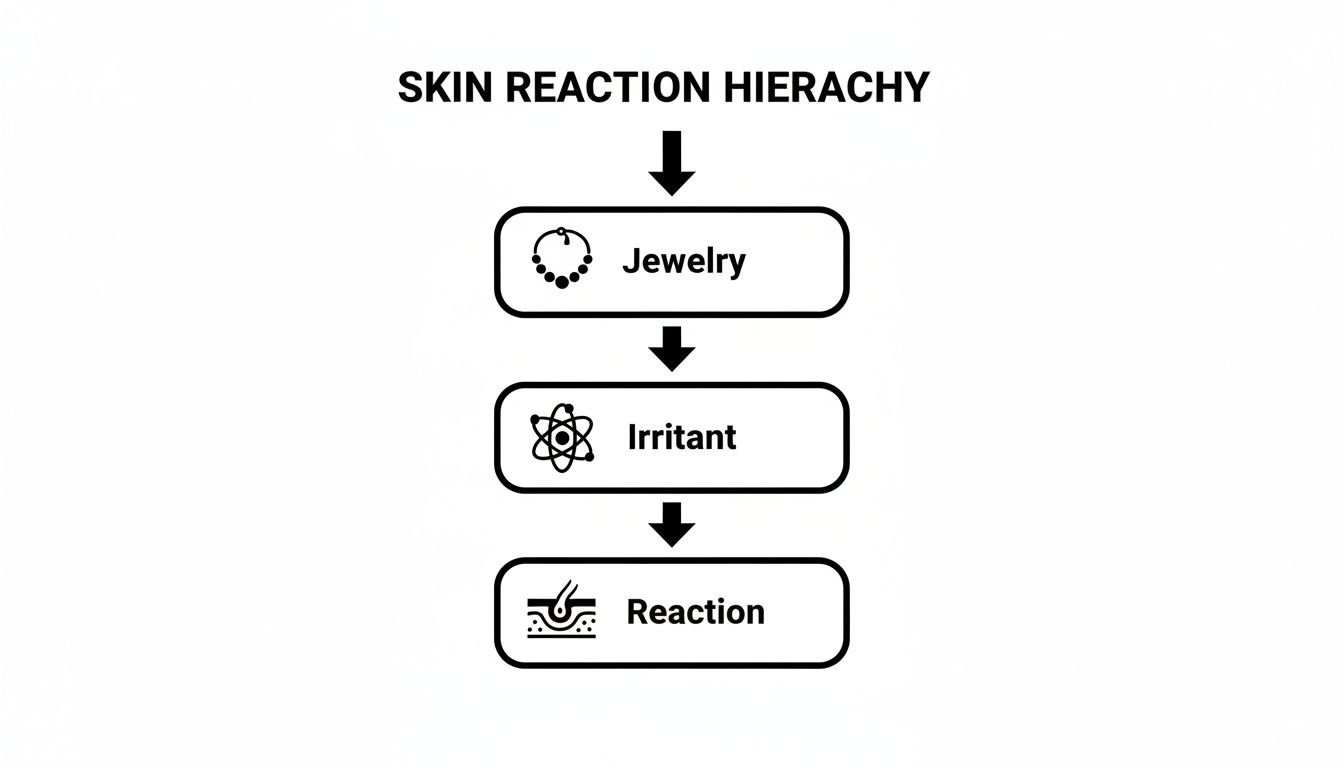
See? It all starts with the material. If you cut out the problem-causers like nickel from the very beginning, you stop a reaction before it even has a chance to start.
Hypoallergenic Metals At a Glance
Feeling a bit overwhelmed? Don't be! I put together this quick-reference table to make it super easy to compare your best options at a glance.
| Material | Hypoallergenic Rating | Best For | Key Benefit |
|---|---|---|---|
| Titanium | Excellent (Medical-Grade) | New piercings, everyday wear, extreme sensitivity | Incredibly lightweight and won't tarnish |
| Platinum | Excellent (95% Pure) | Wedding bands, investment pieces, luxury feel | Unmatched purity and resists fading |
| 18k+ Gold | Very Good | Timeless styles, warm-toned jewelry | Classic look with high purity |
| Surgical Stainless Steel | Good (316L Grade) | Durable everyday pieces, budget-friendly options | Extremely durable and corrosion-resistant |
This table is your new best friend for making smart, skin-safe choices without sacrificing an ounce of style.
Titanium The Lightweight Champion
Titanium is kind of the unsung hero in the world of hypoallergenic jewelry. It’s famous for being crazy strong yet feeling light as a feather when you wear it. Best of all, it’s 100% nickel-free and so safe that it's the go-to material for medical implants. If it's safe enough to go inside your body, you can feel pretty great about wearing it on the outside, especially with new piercings.
It has a naturally cool, modern gray tone, but it can also be treated to show off a whole rainbow of colors—no dyes or weird coatings needed. It’s also a total workhorse, standing up to sweat and saltwater without ever tarnishing.
With an estimated 17% of women dealing with metal allergies, the shift to safe materials like titanium isn't just a trend; it's a game-changer. It's a huge reason why the global body jewelry market, valued at around USD 13.5 billion in 2023, is expected to hit USD 20.9 billion by 2032. We're all demanding better, safer options!
Platinum The Purest Luxury
If you're after that timeless, elegant look, platinum is your girl. It's naturally hypoallergenic and is usually 95% pure platinum, which means there's almost no room for any other metals to sneak in and cause trouble.
Its bright, silvery-white shine never fades or tarnishes, which makes it an amazing investment for those forever pieces like wedding rings or classic diamond studs. It’s definitely pricier, but its durability means it holds onto gemstones securely and handles daily life like a pro.
Platinum's purity is its promise. When you choose platinum, you're not just buying a piece of jewelry; you're investing in peace of mind and enduring style that will never compromise your skin's health.
High-Karat Gold The Timeless Classic
Everyone loves gold, but not all gold is created equal, especially for us sensitive-skin types. The secret is in the karat, which tells you how pure it is. Since 24k gold is way too soft for most jewelry, it’s mixed with other metals (alloys) to make it stronger.
For us, the safest options are:
- 18-Karat Gold: This is 75% pure gold, and it's mixed with other skin-safe metals. It has that gorgeous, rich color and is a fantastic choice. A piece like this beautiful 18k gold plated stainless steel bead necklace is a perfect example of a safe and super-stylish option.
- 14-Karat Gold: This one is 58.3% pure gold and is a really popular, durable choice. The key here is to make sure the other metals in the mix are nickel-free. Always ask!
As a rule, I'd stay away from 10k gold or anything lower. The percentage of other mystery metals is just too high, and so is your risk of a nickel reaction. If you're shopping for gold, knowing how to tell real gold jewelry from the fakes is a must to keep your skin happy.
Surgical Stainless Steel The Durable Workhorse
Don't sleep on surgical stainless steel! It's another amazing choice, known for being super tough and affordable. This is the same stuff used in medical tools, so you know it's designed with safety in mind.
You’ll want to look for specific grades like 316L or 316LVM. These have an incredibly low nickel content, and what little nickel there is gets "locked" inside the metal, so it's extremely unlikely to ever touch your skin and cause a reaction. It's the perfect material for those everyday pieces you never want to take off.
Metals and Coatings to Watch Out For
Knowing which metals will keep your skin happy is amazing, but it's only half the story. To really build a collection you can wear without a second thought, you have to know which materials are the usual suspects behind those itchy, red reactions.
Spotting these troublemakers before you buy is the secret to avoiding irritation completely. Think of this as your field guide to the jewelry world's red flags. We’ll go over the common culprits hiding in plain sight and I'll teach you how to decode those confusing labels on plated pieces. Soon you'll be shopping with total confidence.
The Most Common Metal Irritants
When you're looking for jewelry for sensitive skin, avoiding certain metals is just a non-negotiable. They're often used as cheap fillers in fashion jewelry to add strength or bring down the cost, but for so many of us, they're the direct cause of all that redness and itching.
Here are the main ones to keep an eye out for:
- Nickel: This is the absolute number one offender. It’s a strong, cheap metal that’s mixed into alloys all the time for fast-fashion jewelry. Unfortunately, it's also the biggest cause of contact dermatitis in the entire world.
- Lead and Cadmium: You might find these heavy metals in super cheap, mass-produced jewelry. Besides just causing a skin reaction, they are actually toxic and should be avoided, period. It's a safety thing.
- Low-Karat Gold: While pure gold is safe, anything below 14k (like 10k or gold-plated brass) has a much higher percentage of other metals mixed in. This seriously increases the odds that nickel is part of that mix.
My rule of thumb? Be a jewelry detective. Your mission is to look past the shiny surface and figure out what the core materials really are. The most beautiful piece is worthless if you can't actually wear it.
Decoding Plated and Coated Jewelry
Okay, this is where things can get a little tricky. You might see a piece labeled "gold," but that doesn't always mean it's solid gold. A lot of affordable styles have a super thin layer of a precious metal over a less expensive base metal—and that base is often where the problem is hiding.
It's kind of like a beautiful coat of paint over a rusty frame. It looks great at first, but once that paint starts to chip, the trouble begins. Let's break down the lingo you'll see out there.
Understanding Gold Plating and Its Cousins
When you're shopping, you'll see all different types of gold-coated jewelry. They are NOT all created equal—they're wildly different in quality, how long they'll last, and how skin-friendly they are.
Gold-Plated Jewelry This is the most common and cheapest type of coated jewelry you'll find. It’s made using a process called electroplating, where a microscopically thin layer of gold is put over a base metal, usually brass, copper, or nickel. The gold layer is insanely thin—typically less than 0.05% of the item's total weight.
Because that coating is so fragile, it wears off really fast from friction, sweat, and lotions. Once it does, your skin is touching the base metal underneath, which is very often a nickel alloy. This is exactly why a brand-new pair of "gold" earrings can suddenly start bugging you after just a few weeks.
Gold-Filled Jewelry This is a huge step up in quality and a much, much safer bet for sensitive skin. Gold-filled pieces are made by bonding a thick layer of solid gold (usually 14k) to a base metal core using intense heat and pressure.
By law, the gold has to make up at least 5% of the item's total weight. That means gold-filled jewelry has about 100 times more gold than gold-plated pieces! This thick, durable layer is way more resistant to tarnishing or wearing off, which keeps that base metal safely tucked away from your skin. It’s a fantastic, long-lasting alternative to solid gold.
Gold Vermeil Pronounced "ver-may," this is another higher-quality option. For a piece to be called true vermeil, it has to meet two rules: the base metal must be sterling silver, and the gold plating has to be at least 2.5 microns thick. While it's still a plated piece, that sterling silver base is way less likely to cause a reaction than brass or nickel, so it's a great choice for a lot of people with sensitivities.
Here’s a quick cheat sheet to help you remember the differences:
| Feature | Gold-Plated | Gold-Filled | Gold Vermeil |
|---|---|---|---|
| Base Metal | Brass, Copper, or Nickel | Usually Brass | Sterling Silver |
| Gold Content | Less than 0.05% | At least 5% | Varies (Thick Plating) |
| Durability | Low (Wears off fast) | High (Lasts for years) | Medium-High |
| Best For | Trendy, occasional wear | Everyday wear, sensitive skin | Quality at a mid-range price |
Your Smart Shopping Checklist for Sensitive Skin Jewelry
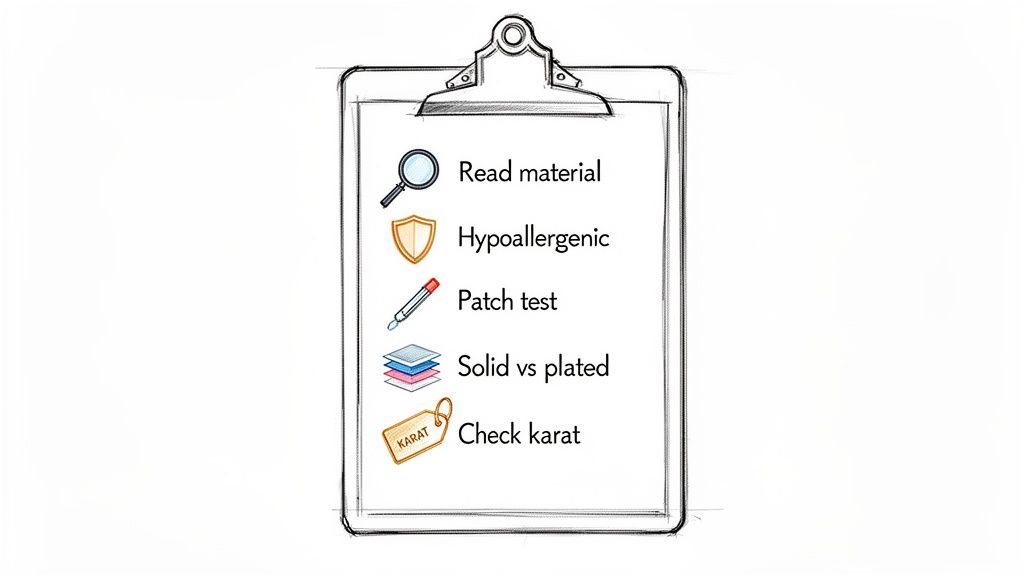
Okay, so now that you know which metals are your friends and which are your sworn enemies, it's time to actually go shopping. I know, this part can feel like a total minefield, but it really doesn't have to be. Once you're armed with the right info, it stops being a frustrating guessing game and becomes a fun, confident hunt for gorgeous pieces you can actually wear.
Think of this list as your secret weapon. Keep it handy whether you're scrolling online or wandering through a cute boutique. It’ll help you size up any piece in seconds and make a smart, skin-safe choice.
Always Read the Full Material Description
Seriously, this is the most important step. Don't just get distracted by a sparkly gem or a "hypoallergenic" tag—you have to play detective and dig into the nitty-gritty details. A good brand will always tell you exactly what the base metal is and what kind of plating they used.
If the description is super vague, using wishy-washy terms like "metal alloy" or "base metal," that's a major red flag. Brands that are proud of their quality (and actually care about your skin!) will be totally transparent.
Look for Skin-Safe Keywords
Get into the habit of scanning product pages for the good stuff. It’s a simple trick that helps you instantly filter out the junk and focus on pieces that won’t betray you.
Train your eyes to spot these terms:
- Titanium (especially "implant-grade" – that’s the best of the best!)
- Platinum
- Surgical Stainless Steel (look for 316L)
- 14k Gold, 18k Gold, or higher
- Gold-Filled
- Gold Vermeil
- Nickel-Free
Seeing these keywords is a great sign you're on the right track. For instance, when you browse our Lenny Lane jewelry collection, you'll notice we're all about these high-quality, clearly labeled materials because we get it.
Your new shopping mantra: "If I don't know exactly what it's made of, I'm not buying it." It's a simple rule that will save your skin and your wallet from so much drama.
Understand Plating vs. Solid Metal
You've got to know if a piece is solid metal or just plated. Remember, a super thin gold plating over a nickel or brass base can wear off in a hot minute, exposing your skin to the irritating metal hiding underneath. It's the ultimate bait-and-switch.
A gold-filled piece is a whole different story. It has a much, much thicker layer of real gold (at least 5% of the item's total weight), which gives you way more protection and durability. For jewelry you want to wear every day, it's a far better choice than standard plating.
Do a Patch Test with New Pieces
Even when you buy from a trusted brand, it’s always a good idea to test-drive a new piece before committing to a full day. Pop in those new earrings or wear that new necklace for just a few hours while you're hanging out at home.
This little pre-wear check can save you from a major meltdown when you're out and about. It’s the final step to confirm that a piece truly works for your specific skin, giving you total peace of mind to build a stunning jewelry collection you can truly love and live in.
Caring for Your Hypoallergenic Jewelry
So you’ve invested in some gorgeous, high-quality hypoallergenic pieces. I love that for you! It’s a total game-changer for your skin and your style. But to keep that jewelry looking amazing and feeling great, a little bit of upkeep is key.
Even the best metals can get a little grimy from skin oils, lotions, and just… life. This buildup can make your favorite pieces look dull and, worse, trap bacteria that could cause a little irritation. A little TLC ensures your jewelry stays as comfy and sparkly as the day you got it.
Simple Cleaning for Different Materials
Don't worry, you don't need any harsh chemicals or complicated routines. Actually, the gentler you are, the better. The trick is just to match your cleaning method to the metal so you don't accidentally cause any damage while trying to bring back its shine.
Here’s a quick rundown of what works best:
- Titanium and Surgical Steel: These guys are tough and so easy to care for. Just grab a soft cloth, a little bit of mild, fragrance-free soap, and some warm water. Give them a gentle wipe, rinse well, and pat them completely dry to avoid water spots. Easy peasy.
- Platinum and High-Karat Gold: For these beauties, a soft, lint-free polishing cloth is usually all you need to handle smudges and bring back that gorgeous luster. If they need a deeper clean, you can let them soak for a few minutes in a bowl of warm water with a couple of drops of gentle dish soap.
- Gold-Filled and Gold Vermeil: The golden rule here is to avoid anything abrasive, since these pieces have a thick but delicate outer layer. A soft cloth is your best friend. If you need to, you can dampen it just a little to wipe away any residue, but make sure you dry it right away.
I like to think of jewelry care as part of my skincare routine. You cleanse your face every day to get rid of buildup, right? It's the same idea. Cleaning your jewelry gets rid of potential irritants, keeping it fresh and ready to wear.
Smart Storage to Prevent Damage
Okay, let's talk storage. How you put your jewelry away is just as important as how you clean it. Tossing everything into one big drawer is basically asking for scratches, tangled chains, and ruined finishes. We don't want that!
The secret is to store each piece separately. A jewelry box with fabric-lined compartments is perfect, or you can even keep pieces in their own small, soft pouches. This stops harder metals from scratching up softer ones and—my personal pet peeve—keeps delicate chains from turning into a knotted nightmare. Taking this one extra step will make sure your best jewelry for sensitive skin stays beautiful for years.
A Few Lingering Questions About Sensitive Skin Jewelry
Okay, so we've covered a lot, but I know you might still have some questions floating around. It's totally normal! Getting the facts straight is the best way to feel confident about the jewelry you're buying and wearing. Let's tackle some of the most common ones I hear.
Is Sterling Silver Actually Good for Sensitive Skin?
This is such a tricky one, and honestly, the answer is: it depends.
Here's the deal: pure silver is way too soft to be made into jewelry that lasts. So, it's mixed with other metals to make it stronger. That alloy is what we call sterling silver, and it's 92.5% silver. The problem is that other 7.5%.
Traditionally, that 7.5% was copper, which can be an issue for some people. But the bigger problem, especially with cheaper pieces, is that nickel gets mixed in to make the silver harder. So, your safest bet is to always look for jewelry that’s clearly labeled "nickel-free sterling silver." That little phrase is your golden ticket to avoiding the number one cause of metal allergies.
Wait, Can I Develop a Metal Allergy Later in Life?
Yes, you absolutely can. It’s a common misconception that you’re just born with these things. An allergy can pop up at any age, usually after you’ve been in contact with an allergen (like nickel) over and over again. The technical term for this is sensitization.
I like to think of it like a cup slowly filling with water. Every time you wear jewelry with a bit of nickel, you're adding a few more drops to the cup. For years, nothing happens. Then one day, the cup overflows—and that's when your immune system decides it's had enough and starts treating that metal like an enemy. It's why choosing safe metals is a smart move for everyone, not just for people who already know they have sensitive skin.
An allergic reaction is your body's way of sending you a very clear message. Listening to it and switching to skin-safe materials is the best way to keep your style comfortable and irritation-free for the long haul.
Help! What Should I Do If I Have an Allergic Reaction?
First off, don't panic! If you see any redness, itching, or swelling where your jewelry was sitting, the very first thing you need to do is take the piece off. Immediately. This stops any more of the allergen from getting on your skin.
Next, just gently wash the area with some mild soap and water, and pat it dry—don't rub! A little over-the-counter hydrocortisone cream can be a lifesaver for calming down the itch and irritation. If you want to dive deeper into other safe options and tips, you might find some great info in our expert guide on the best jewelry for sensitive skin.
Now, if the reaction is really bad—I'm talking blisters, serious pain, or if it isn't getting better after a day or two—it's time to call a doctor or dermatologist. They can figure out exactly what's going on and get you the right treatment to feel better.
Here at Lenny Lane, we're firm believers that you should never have to sacrifice style for comfort. That's why we are so picky about the pieces we bring in, making sure everything is beautiful, on-trend, and made from materials your skin will love. Go ahead and explore our collection—it's time to build a jewelry box you can wear with total confidence.