



What Is Sustainable Fashion and How Does It Work?
So, what is sustainable fashion, really?
It’s a thoughtful way of looking at clothes that considers the entire life of a garment—from the seed in the ground to what happens when you’re done with it. The whole goal is to be better for both people and the planet. It’s a complete shift away from the super-fast, throwaway model that’s taken over the fashion industry, putting the focus back on quality, ethics, and environmental care.
Understanding Sustainable Fashion and Why It Matters
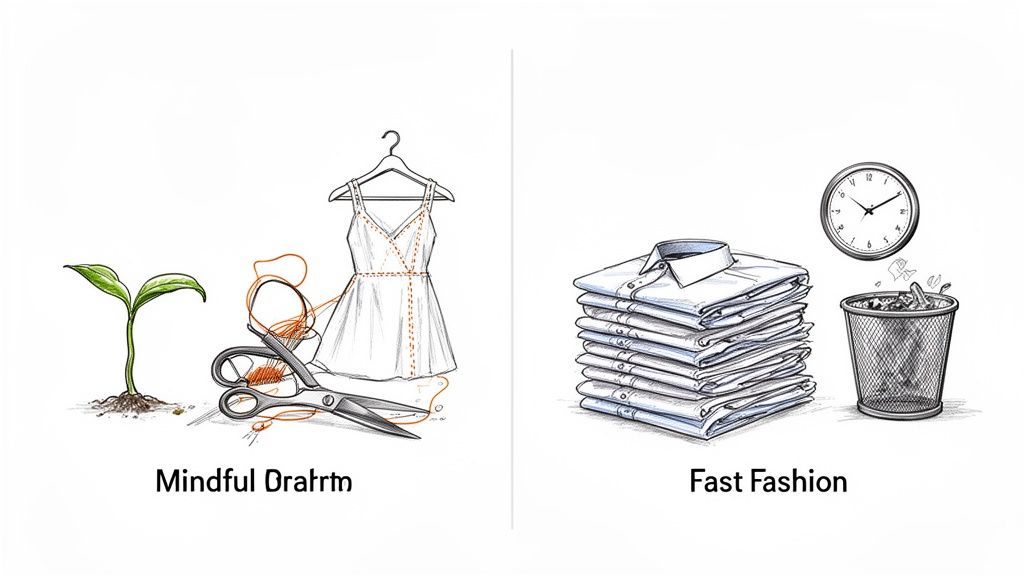
Here's a simple way to think about it: imagine the difference between a home-cooked meal made with fresh, local ingredients versus a fast-food burger. One is crafted with care, meant to be enjoyed, and you know exactly what went into it. The other is churned out for speed and convenience, with little thought for its origins or real value. Sustainable fashion is the farm-to-table meal of your closet.
This approach looks at the entire journey of your clothes. It’s all about asking the right questions before you buy.
- Where did the materials come from? Are we talking organic cotton, recycled fabrics, or something else produced with a light footprint?
- Who made my clothes? Were the people who stitched this garment paid a living wage and treated with respect in a safe place?
- How was it produced? Did the factory dump toxic dyes into rivers or use a ton of water?
- What’s the endgame? Is this piece built to last for years, easy to repair, or designed to be recycled into something new?
A Real Answer to a Growing Problem
Sustainable fashion isn't just some nice-to-have trend; it’s a direct response to the massive mess the conventional clothing industry has made. The fashion world is responsible for about 10% of global carbon emissions—that's huge. Plus, cheap synthetic fibers made from fossil fuels, like polyester, are set to make up a staggering 73% of all fibers by 2030. The whole system is built on churning out massive volumes of clothing as quickly as possible, and that speed comes at a serious cost to our planet and its people. You can dive deeper into the industry's dynamics on McKinsey.com.
To really see the difference, a quick side-by-side comparison makes it crystal clear.
Sustainable Fashion vs. Fast Fashion at a Glance
| Attribute | Sustainable Fashion | Fast Fashion |
|---|---|---|
| Materials | Organic, recycled, low-impact fibers | Synthetic, virgin, resource-intensive |
| Production | Small batches, fair wages, safe conditions | Mass production, low wages, poor conditions |
| Quality | Made to last, durable construction | Low quality, designed for a few wears |
| Lifespan | Long-term wear, repairable, recyclable | Disposable, trends-driven, ends in landfill |
| Environmental Impact | Minimal water/chemical use, lower emissions | High pollution, waste, and carbon footprint |
This table just scratches the surface, but it shows the fundamental split: one system values longevity and responsibility, while the other prioritizes speed and profit above all else.
At its heart, sustainable fashion is simply clothing, shoes, and accessories that are made with lower-impact materials, fair wages, safer working conditions, and smarter use of resources. It’s about building a system that can actually keep going without wrecking the planet or exploiting people.
When you choose to buy from a sustainable brand, you're investing in a healthier, kinder industry. It’s about stepping away from the endless cycle of disposable trends and instead building a wardrobe filled with pieces you truly love—full of style, quality, and purpose. This conscious way of shopping is quickly becoming the new standard for anyone who cares about looking good and feeling good about their choices.
The Four Pillars of a Conscious Wardrobe
So, you want to build a more conscious wardrobe, but where do you even start? It helps to break it down into four core ideas. Think of them like the legs on a sturdy, beautiful table—you need all four for things to feel balanced and right.
Once you get a handle on these, you can see past the marketing fluff and really understand what makes one piece of clothing a better choice than another. It's all about shifting from a throwaway mindset to one that values what we wear.
Better Materials
It all begins with the fabric. The best materials are grown and made in a way that’s kinder to the planet. We're talking about choosing a breezy linen dress over a synthetic polyester top. Why? Because linen comes from flax plants that barely need any water, while polyester is basically a plastic made from petroleum. Yikes.
Here are a few of the good guys:
- Organic Cotton: Grown without all the nasty pesticides and chemical fertilizers. This is so much better for the soil, the water, and the farmers.
- Hemp: This plant is a total powerhouse. It grows super fast, is incredibly durable, and actually makes the soil healthier just by being there.
- Linen: Made from the hardy flax plant, it’s biodegradable, strong, and feels amazing on a hot day.
- Recycled Fibers: Think recycled polyester (rPET) or recycled cotton. These give existing materials a second chance, cutting down on waste and the need to create new stuff from scratch.
Ethical Labor
This one is all about the people. Who actually made your clothes? Were they paid fairly? Did they work in a safe place? Ethical labor means making sure every single person in the supply chain, from the farmer growing the cotton to the person sewing the seams, is treated with respect.
At its heart, sustainable fashion is about believing that beautiful clothes should never, ever come at the cost of someone's dignity.
This is a huge deal in an industry where exploitation has been hidden for way too long. When you support brands that are open about their factories and pay their workers a living wage, you’re investing in a much kinder system.
Circular Design
Okay, let's talk about the old "take-make-waste" model. For decades, fashion has been about buying something cheap, wearing it a few times, and tossing it. Circular design completely flips that script. It’s the idea that clothes should be made with their entire life in mind.
This means creating pieces that are not just built to last, but are also easy to repair, resell, or eventually recycle into brand new fabric. It's a "closed-loop" system where old clothes don't hit the landfill—they become the building blocks for new ones. You might see a brand design a jacket with buttons that are easy to replace, or offer a program to take back your old jeans to be repurposed. It’s about treating clothing like a resource, not trash.
Lasting Quality
And finally, the pillar that ties it all together: quality that lasts. This is the simple but powerful idea of buying fewer things, but making sure they're better things. A well-made garment with a timeless design and durable fabric can be worn and loved for years, not just for a single season.
Investing in quality is one of the most sustainable things you can do because it automatically reduces how much you buy and throw away. For more on this, check out our guide to identifying quality women's clothing brands that truly go the distance.
It's a pretty big deal. Did you know that over 96% of greenhouse gas emissions from big clothing brands come from their supply chains, not their stores? It's wild. By making better clothes that don't need to be replaced all the time, brands can seriously cut down on that impact. You can dig into more of these supply chain statistics on bestcolorfulsocks.com.
How to Spot Genuinely Sustainable Brands
Let’s be real: trying to shop sustainably can sometimes feel like a pop quiz you didn’t study for. So many brands throw around words like "eco-friendly" and "green" that it's tough to tell who's actually walking the walk and who's just talking the talk. But I promise, with a little practice, you can become a pro at this—a "fashion detective" who sees right through the fluff.
The secret? Look for specifics. Look for transparency. A brand that’s proud of its practices will be happy to share the details. Vague claims are a major red flag; concrete facts are the green light you’re looking for.
Look Beyond The Tagline
True sustainability isn't about catchy slogans; it's about proof you can actually verify. So, instead of getting swept up by nice-sounding words, it's time to start asking better questions. The best brands are an open book about how they operate. Digging into an ultimate guide to transparency in supply chains is a great way to get comfortable with what to look for.
Here’s what you should be scanning for:
- Material Specifics: Do they just say “sustainable fabric,” or do they get into the nitty-gritty, like 100% GOTS-certified organic cotton or 70% recycled polyester? The details matter. Knowing the exact material also helps you understand how it will feel and last—our guide on the best fabrics for summer dresses is a perfect example of how material choice makes all the difference.
- Factory Information: Does the brand mention its factories by name or tell you about its manufacturing partners? When a company is truly ethical, they’re proud of the people who make their clothes and aren't afraid to show it.
- Clear Goals And Progress: Do they publish reports on their sustainability goals? Brands that are serious about making a difference will share their wins and their challenges along the way.
Decode Common Certifications
Think of third-party certifications as a trusted expert who has already done the homework for you. When you see one of these logos, it means an independent group has verified that a brand meets specific environmental or social standards. They cut through the marketing noise and give you clear, reliable info.
I like to think of certifications as a brand's report card. They give you an objective score, making it so much easier to trust their claims and make a choice you feel good about.
You’ll start seeing these everywhere once you know what to look for. Here's a handy guide to some of the most common ones.
Common Sustainable Fashion Certifications and What They Mean
| Certification Logo | What It Guarantees | Commonly Found On |
|---|---|---|
| GOTS (Global Organic Textile Standard) | The gold standard for organic fibers. It ensures textiles are made from at least 70% organic material and that the entire production process is environmentally and socially responsible. | Cotton T-shirts, linen pants, baby clothes, bedding. |
| Fair Trade Certified | This logo is all about the people. It guarantees that workers received fair wages, work in safe conditions, and can invest in their communities. | Coffee and chocolate, but also cotton basics, and artisan-made apparel. |
| B Corp (Certified B Corporation) | This is a big one. It's a comprehensive certification that evaluates a company's entire social and environmental impact—from its supply chain and materials to its employee benefits and charity work. | A wide range of brands, from outdoor gear companies to everyday fashion labels. |
| OEKO-TEX STANDARD 100 | This certifies that every component of an item—from the thread to the buttons—has been tested for harmful substances and is safe for human health. | Activewear, underwear, and anything that sits close to your skin. |
Seeing one of these labels is a great sign that a brand is investing in doing things the right way.
The whole process of building a more thoughtful wardrobe can be simplified with a few key questions.
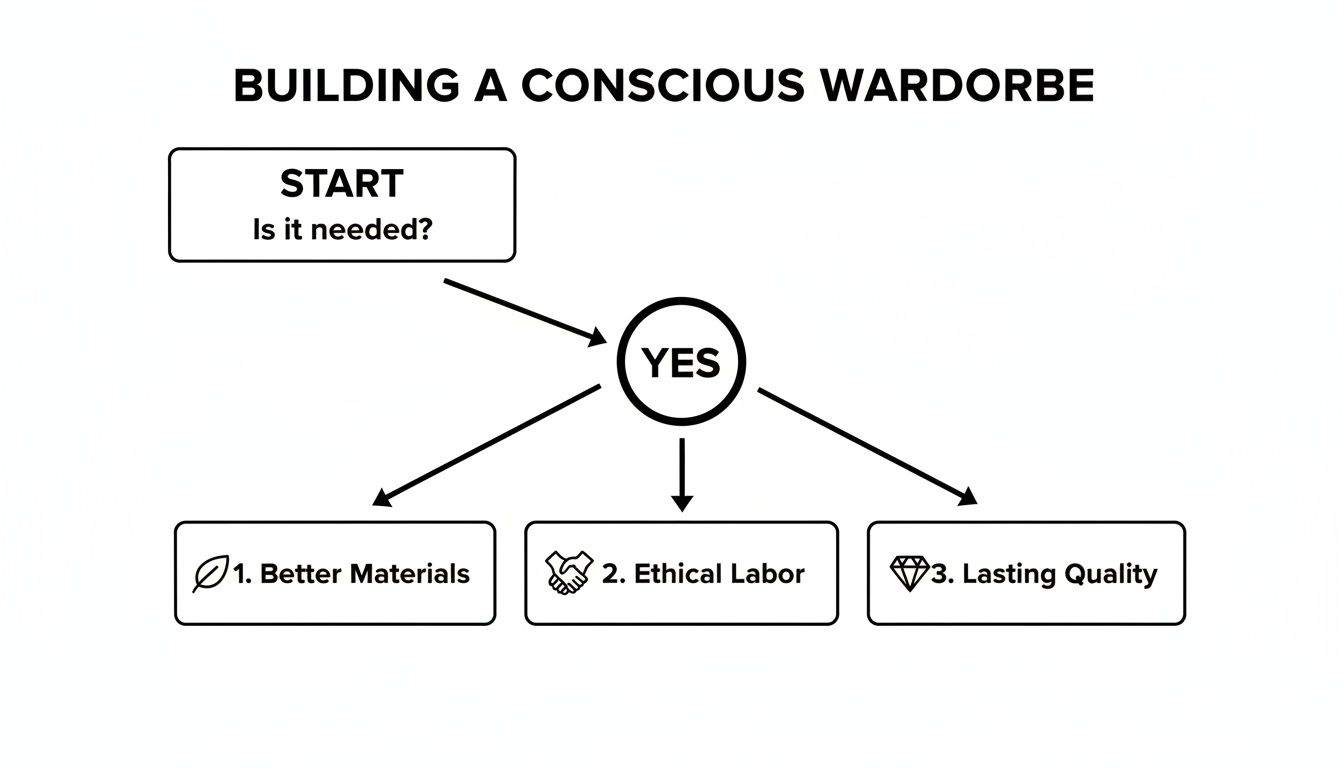
As you can see, it all starts before you even think about a specific brand. First, you ask if you truly need it. Then, you can move on to choosing better materials, supporting ethical labor, and investing in quality that lasts. Simple, right?
Why Conscious Style Is Here to Stay
Let’s be honest: sustainable fashion used to feel like a niche interest for a dedicated few. Not anymore. It has officially gone mainstream, becoming a powerful force that’s changing how we all think about style. This isn't just some passing trend. It's a real shift in what we value, with more and more of us looking for clothes that tell a good story—one of fairness, quality, and respect for our planet.
This whole movement is powered by a simple idea: our choices matter. People are asking tough questions and expecting real answers from the brands they buy from. It's pretty clear that transparency and responsibility are the new markers of a truly modern brand.
The Market Is Proving Its Power
The numbers don't lie. What was once a tiny corner of the industry is now one of its biggest growth areas. The global sustainable fashion market is set to explode, with some analysts predicting it could hit over $53 billion by 2032. That’s a growth rate of around 23.1% a year—way, way faster than the rest of the clothing industry. You can dive deeper into these numbers with insights published by Coherent Market Insights.
This kind of growth makes it obvious that sustainable fashion isn't just an ethical choice; it's a smart business move. And with North America already making up over 30% of the market, it’s clear that shoppers here are leading the charge and are more than willing to put their money behind brands that share their values.
Sustainable fashion has officially graduated from a "nice-to-have" to a non-negotiable for a huge number of shoppers. It’s a clear signal that the future of style is thoughtful, intentional, and built to last.
From Niche to Mainstream Style
This shift is getting a huge boost from style influencers and industry insiders who are all about a more mindful way of dressing. They’re making sustainability genuinely cool and aspirational.
- Vintage and Secondhand: The thrill of finding that perfect one-of-a-kind vintage piece or a pre-loved designer bag is at an all-time high. It's become a status symbol.
- Repair and Upcycling: Showing off a pair of beautifully mended jeans or a creatively altered dress is now a badge of honor. It’s all about celebrating longevity over disposability.
- Championing Ethical Brands: Influencers are using their platforms to shine a spotlight on smaller, responsible brands, giving them the audience they deserve.
Choosing clothes that are well-made and responsibly sourced is no longer the alternative. It’s about being at the forefront of a smarter, more stylish, and way more meaningful way of getting dressed.
Practical First Steps to a More Sustainable Wardrobe
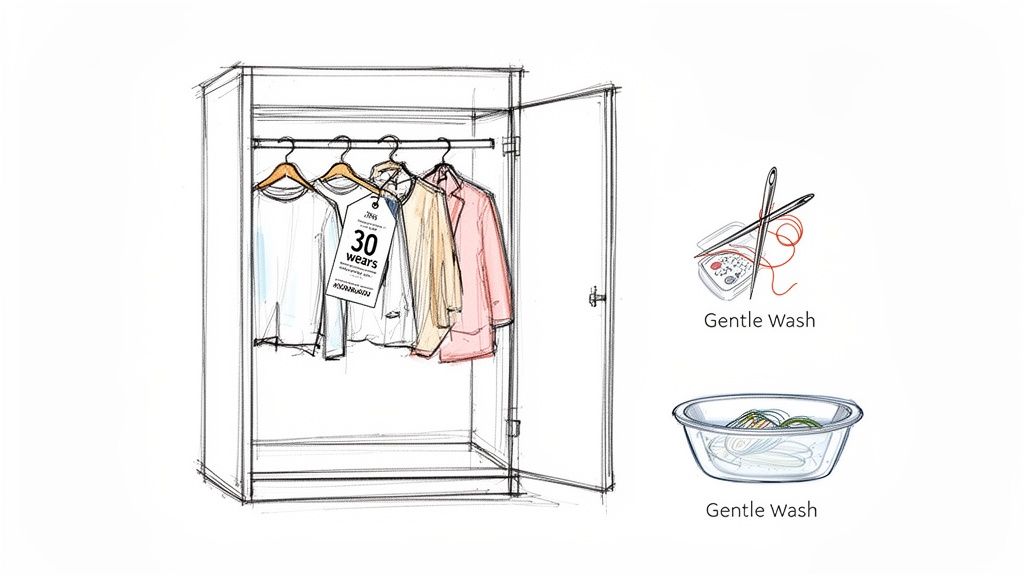
Ready to make a change but not sure where to start? I get it. The idea of a "sustainable wardrobe" can feel a little overwhelming. But here's the good news: you don't need to do a massive, all-or-nothing closet overhaul. It's really just about making small, intentional shifts that add up.
The whole journey actually begins with the clothes you already have, not with a shopping trip. If you focus on making progress instead of chasing perfection, you’ll find this whole conscious style thing is way easier—and honestly, more rewarding—than you think.
Start by Shopping Your Closet
Before you even think about buying something new, take a good, hard look at what’s already hanging in your closet. It's wild, but most of us only wear about 20% of our clothes on a regular basis. That means there's a whole treasure trove of forgotten pieces just waiting for you.
Seriously, pull things out, try on some old favorites, and mess around with new combinations. You'd be surprised at the killer outfits you can put together without spending a cent. Just appreciating what you already own is probably the biggest first step in sustainable fashion.
The most sustainable item you can wear is the one already in your closet. Loving and wearing what you own is the ultimate act of conscious consumerism.
This mindset shift is huge. It helps you figure out what you truly need versus what’s just a fleeting impulse. As you get into this, learning how to create a more mindful wardrobe through a capsule approach can be a fantastic way to keep things simple and stylish.
The 30 Wears Test and Mindful Care
Okay, so when you do decide it's time to add something new, run it by the 30 Wears Test. Before you pull the trigger, just ask yourself, "Am I honestly going to wear this at least 30 times?" This one little question is a game-changer. It forces you to look past trendy stuff and invest in pieces that you'll love for the long haul.
Taking care of your clothes is just as important as choosing them in the first place. When you make a garment last longer, you shrink its environmental footprint in a big way. And it’s the small habits that really make a difference.
- Wash Less and on Cold: Most things don't need a wash after every single wear. When you do throw them in, use cold water. It saves energy and is way gentler on your fabrics.
- Learn Simple Repairs: Sewing a button back on or mending a tiny tear is so much easier than you think. A few basic skills can rescue your favorite pieces from the donation pile.
- Air Dry Whenever Possible: Skipping the dryer is huge. It saves an incredible amount of energy and stops your clothes from getting heat-damaged or shrinking. They'll just look better, longer.
A great way to put all this into practice is by building a solid collection of core pieces you can mix and match. For a full breakdown, check out our guide on how to build a capsule wardrobe that feels totally you.
Your Top Questions About Sustainable Fashion, Answered
Jumping into the world of conscious style can feel a little overwhelming. It's totally normal to have questions or worry you're not doing it "right." I get it! So, let's clear up some of the most common worries with some real, straightforward answers. I want you to feel confident and excited about this.
Is Sustainable Fashion Just… More Expensive?
Okay, this is probably the number one question, and it's a super fair one. When you see a higher price tag on a sustainably made piece, it's easy to get sticker shock. But, I think it's way more helpful to think about cost per wear.
Imagine grabbing a cheap top for $15. It's cute, but after three washes? It's all stretched out and faded. Your cost per wear was $5. Now, think about a beautiful, ethically made top for $75. It's made to last, fits like a dream, and you find yourself reaching for it constantly—maybe 50 times over a few years. All of a sudden, its cost per wear is just $1.50.
You're not just buying another shirt; you're investing in something that will stick with you. This shift is all about buying fewer, better things, which honestly ends up saving you money and closet space in the long run.
So, Do I Have to Throw Out All My Fast Fashion Stuff?
Absolutely not! In fact, please don't—that would be the total opposite of sustainable. The most eco-friendly thing you own is what's already in your closet, no matter where it came from. The goal here is to cut down on waste, not create more by tossing perfectly good clothes.
The real mission is to love, wear, and take care of what you already have for as long as possible. It's about making better choices from now on, not feeling guilty about what you bought in the past.
When one of your older pieces finally gives out and can't be fixed, that's the perfect time to replace it with something made with more care. It’s all about progress, not some impossible standard of perfection.
How Can I Tell if a Brand Is Just "Greenwashing"?
Ugh, greenwashing is so frustrating. It's when a brand uses vague, feel-good marketing to seem way more eco-friendly than they actually are. Your best defense is to put on your detective hat and look for real, specific proof.
If you see fuzzy words like "eco-conscious" or "made with love for the planet" with nothing to back them up, that's a classic red flag. A truly sustainable brand is proud of the work they're doing and isn't afraid to get into the nitty-gritty.
Here’s what to look for to spot the real deal:
- Specifics, Not Slogans: Do they actually name their factories? Do they tell you the exact percentage of recycled material in a piece?
- Third-Party Proof: Do they have legit certifications like GOTS, Fair Trade, or B Corp to back up their claims? These are a huge sign of accountability.
- Honest Talk: Do they talk openly about their goals, their progress, and even where they're still working to improve? That kind of transparency is everything.
If a brand's "sustainability" page is just pretty pictures of forests and no actual facts, it’s probably a good idea to be a little skeptical.
What Are the Easiest First Steps to Take?
You don't have to overhaul your entire life overnight! The best way to start is with small, simple habits that feel good and really add up over time.
Honestly, the easiest and most powerful first step is to just shop your own closet. Spend an afternoon rediscovering pieces you forgot you had and styling them in new ways. It’s amazing how this one little thing can completely curb the urge to buy something new.
Another game-changer is the 30 Wears Test. Before you buy anything, just ask yourself, "Will I genuinely wear this at least 30 times?" It's such a powerful little question that helps you skip impulse buys and focus on things that will truly earn their spot in your wardrobe. And finally, learning a few basic care tricks—like how to wash things properly or sew on a button—is a total superpower for making your clothes last.
At Lenny Lane, we're all about helping you build a wardrobe full of pieces you'll love and reach for again and again. Come explore our collections of quality clothing and timeless accessories to find your next forever-favorite. Check us out online at https://www.lennylane.com.