





How to Choose the Right Jeans for Your Body and Style
Finding the right pair of jeans really boils down to a simple game plan. First, you've got to measure your key areas—think waist, hips, and inseam. Once you have those numbers, you can figure out which cuts are going to flatter your proportions and what to look for in fabric and rise.
Seriously, this little bit of prep work transforms a potentially frustrating shopping trip into a focused, successful mission. It’s like having your own personal roadmap to denim that actually fits and feels amazing.
Your Practical Starting Point for Finding Perfect Jeans
I know, I know—finding jeans that feel like they were made just for you can seem like an impossible task, but trust me, it’s more science than luck. The very first thing to do is arm yourself with your own measurements. Forget what the size on the tag says for a minute. Knowing your true waist, hip, and inseam gives you all the power to decode any brand's sizing chart.
This knowledge is your foundation. Once you have your numbers, you can start exploring all the different denim cuts with total confidence. The most common ones you'll run into are:
- Skinny: Fits like a glove from the waist all the way down to the ankle, hugging every curve.
- Straight: Keeps a consistent width from the knee to the ankle, creating a super clean, long line.
- Bootcut: Flares out just a little bit from the knee down, perfect for slipping over boots (obviously!).
- Flare: Think of it as bootcut's more dramatic cousin, with a much wider opening at the leg.
- Relaxed or Boyfriend: A much looser, more comfortable fit through the hip and thigh area.
Before you start shopping, it's a good idea to have your numbers handy. This little checklist will save you a ton of time and guesswork in the fitting room.
Your Essential Jean Fit Checklist
| Measurement/Feature | How to Measure or Check | Why It Matters |
|---|---|---|
| Waist | Measure around the narrowest part of your torso. | This is the most critical measurement for preventing the dreaded waist gap. |
| Hips | Measure around the fullest part of your hips and butt. | Ensures your jeans won't be too tight or pull across your hips. |
| Inseam | Measure from your crotch down to where you want the hem to hit. | The key to getting the perfect length, whether you're wearing flats or heels. |
| Rise | The distance from the crotch to the waistband. | Determines where the jeans sit on your body (low, mid, or high-rise). |
| Fabric Stretch | Check the tag for elastane/spandex content. | A little stretch (1-2%) adds comfort and helps the jeans keep their shape. |
Once you've got your measurements, you're officially ready to find jeans that feel custom-made.
Why So Many Options Exist
The massive variety of fits isn't there to overwhelm you; it's just a sign of how huge and innovative the denim market is. We're talking about a global industry valued somewhere between USD 86.7 billion and USD 98.6 billion in the mid-2020s! That kind of demand pushes brands to get serious about fit diversity.
It's actually great news for us, because it means that styles like skinny, slim, tapered, and relaxed are all pretty standard now. There are more potential "perfect fits" out there than ever before.
A well-chosen pair of jeans can be the cornerstone of your wardrobe. It’s the piece you reach for again and again because it delivers on both style and comfort, making you feel effortlessly put-together.
Understanding these basic cuts is the first step in building a closet that's both versatile and functional. When you know which styles work for you, you can invest in pieces you'll genuinely love for years. A great pair of straight-leg jeans, for example, can be the base for countless amazing outfits. To take this idea even further, check out our guide on how to build a capsule wardrobe, where we talk all about how foundational pieces like the right jeans can completely simplify your style.
Matching Denim Cuts to Your Body Shape
Alright, you've got your measurements—now for the fun part. This is where we move beyond the numbers and into the art of styling. We’re going to talk about how different denim cuts work with your body’s unique shape to create a silhouette you feel absolutely incredible in.
Think of your body shape—whether you're more of a pear, apple, hourglass, or athletic—as your personal style playbook. It’s the key to understanding why some jeans feel like they were made for you, while others just... don't. For instance, if you've ever dealt with that annoying waist gap at the back of your jeans, you know the classic struggle for pear shapes trying to fit both their hips and waist.
Finding Balance for Pear and Hourglass Shapes
If you’re a pear shape with hips wider than your shoulders, it’s all about creating visual balance. Your new best friends? Bootcut and flare jeans. That little kick at the hem mirrors the width of your hips, creating this gorgeous, elongated line that just flows.
And for my hourglass ladies—with your proportional bust and hips and that defined waist—you can honestly pull off so much. A great high-waisted skinny or a classic straight-leg jean will beautifully show off your natural curves without adding any extra volume where you don't want it. It keeps the focus right where it should be: on that cinched-in waist.
Creating Curves for Athletic and Rectangle Shapes
For those with an athletic or rectangle frame that's a bit straighter through the hips, the right denim can work magic to create the illusion of curves. I always recommend a high-waisted straight-leg jean. It does an amazing job of cinching in at the waist and giving you more definition.
Another fantastic option is a relaxed or "boyfriend" cut that sits a little lower on the hips. It adds just the right amount of volume and a cool, effortless vibe that keeps your silhouette from looking too linear. Just be careful not to go too baggy, as that can sometimes overwhelm a straighter frame.
A great fit is all about proportion, not perfection. The right cut of jeans won't change your body; it will simply highlight your best features and make you feel incredible in your own skin.
To make things even easier, I love using a little decision tree to help guide you from measuring to picking the perfect cut for your shape.
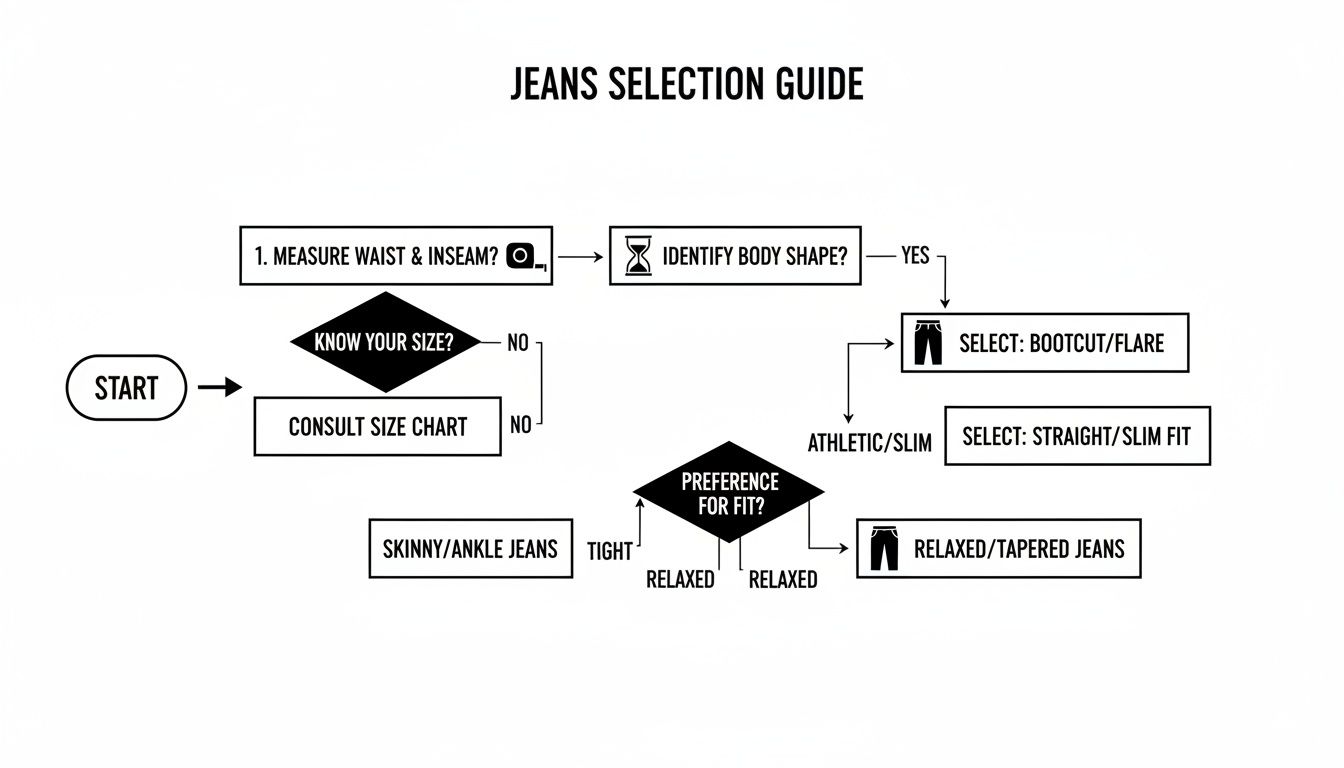
As you can see, once you have your measurements, you can pinpoint your body type, which then points you directly to the cuts that will flatter you most. It takes so much of the guesswork out of it!
Flattering Fits for Apple Shapes
If you tend to carry your weight around your midsection—a classic apple shape—the goal is to find a jean that offers some gentle support while creating a long, lean leg line. You’ll want to look for a mid-rise or high-rise straight-leg or a subtle bootcut style.
These cuts smooth and support the tummy area, while the leg shape helps balance out your upper body. I love styling them with a top that flows gracefully over the waistband for a look that's as comfortable as it is chic.
For a deeper dive into this, check out our complete guide on how to dress for your body type. Seriously, this kind of knowledge is a game-changer for building a wardrobe you truly love.
Let's Talk Rise, Inseam, and Fabric
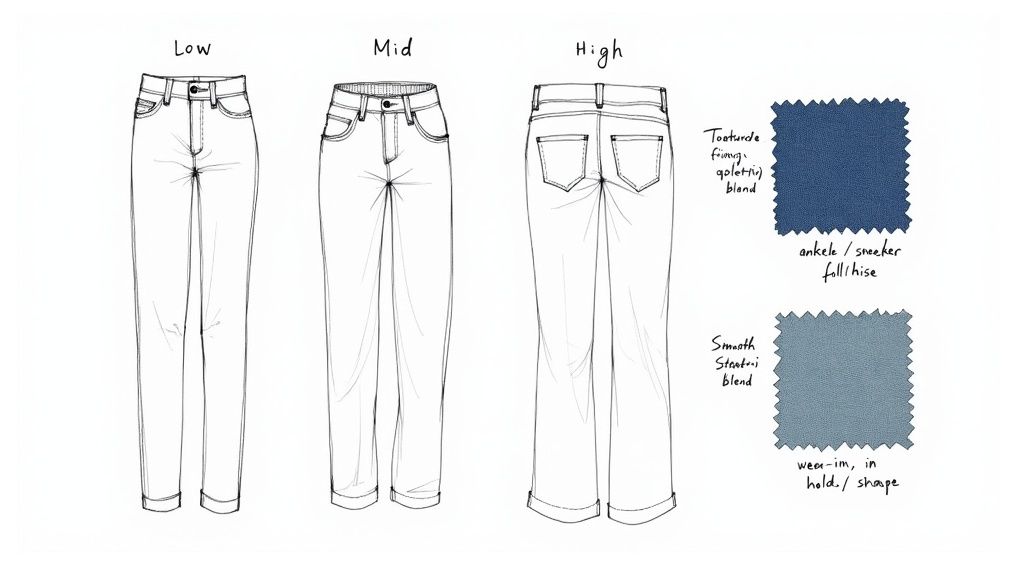
Okay, so getting the cut and size right is the foundation, but the real magic happens when you nail three key details: the rise, the inseam, and the fabric. Honestly, this is what separates a pair of jeans that just fits from one that feels like it was made for you.
Think of these as the finishing touches. A tiny shift in any of them can completely change the vibe, the proportions, and how you feel wearing them. It’s why paying attention here is such a game-changer.
Decoding The Rise
The rise is simply the distance from the crotch seam up to the waistband. It's a big deal because it determines exactly where your jeans sit on your body. This isn't just about what's trendy; it’s about working with your natural proportions to create a silhouette that feels balanced and, let's be real, super flattering.
- Low-Rise: These sit way below your belly button, usually on or even below your hips. It’s that classic Y2K look and has a very casual, laid-back feel.
- Mid-Rise: Your go-to for everyday wear. It typically hits just below the navel, close to your natural waist. Most people find this to be the sweet spot for comfort and versatility.
- High-Rise: Sits right at or sometimes even above your navel. I love a good high-rise. It’s amazing for defining your waist and making your legs look a mile long. Instant polish.
Here's the secret: choosing the right rise has less to do with your height and more to do with your torso length. Got a longer torso? A high-rise can create a gorgeous, balanced look. If your torso is on the shorter side, a mid-rise is your best friend—it won't make your top half feel cut off or compressed.
Mastering The Inseam
Next up is the inseam, which is the measurement from the crotch seam all the way down to the hem. The "right" length is totally dependent on two things: the style of the jeans and the shoes you're planning to wear. An inseam that’s perfect with sneakers can look totally awkward with a pair of heels.
When you're shopping, try to picture the outfit. A cropped straight-leg jean should hit just above the ankle—it’s all about showing off your shoes! But for a flare or a bootcut, you want that hem to just about graze the floor with your heels or boots on. That’s how you get that incredible leg-lengthening effect.
Pro Tip: Don't be afraid to have jeans with different inseams in your closet! It’s so much better to have one pair dedicated to heels and another for your favorite flats than to try and make one pair work for everything (it never really does).
Fabric: The Foundation of Fit and Feel
Finally, let's talk fabric. The little tag inside your jeans tells a huge story about how they'll fit, feel, and wear over time.
Rigid (100% Cotton) Denim
This is your classic, old-school denim. It starts out pretty stiff, but the payoff is huge—it molds to your body perfectly over time, creating fades and a fit that is 100% unique to you. It's incredibly durable but has absolutely no stretch, so getting the size right from the get-go is key.
Stretch Denim (Cotton with Elastane/Spandex)
Most of the jeans you'll find today have a little bit of stretch, usually 1-3% elastane or a similar fiber. This gives you that immediate comfort and lets the jeans move with you. Jeans with some stretch are great for holding their shape all day long. A word of caution: too much stretch can sometimes cause them to bag out. It's all about finding that perfect sweet spot between structure and comfort.
Conquering the Fitting Room and Online Shopping
Alright, you've got your measurements and a solid idea of the cuts you want to try. Now for the fun part: putting that knowledge to the test, whether you’re hitting the racks in person or browsing from your couch. Think of the fitting room as your personal denim lab—this is where you gather all the intel to make the right choice.
And whatever you do, don't just stand there and stare at the mirror. A good pair of jeans has to work for your actual life, not just for a static pose. So get moving!
The In-Store Fit Test
When you’re trying on a pair, it’s so easy to just focus on the number on the tag. But a quick mental checklist can save you from buyer's remorse later. It only takes a minute, I promise.
- The Squat Test: Before you even glance in the mirror, drop into a deep squat. Seriously. Do they feel like they're about to split at the thighs? Are they sliding way down your back? This is the ultimate test for stretch, fit, and real-world comfort.
- The Waist Gap Check: Now, stand up straight and slip your hand between your back and the waistband. If you can easily fit more than two fingers, you’ve got a dreaded waist gap. That's a one-way ticket to constantly hiking up your jeans or needing a belt.
- The Pocket Placement Glance: Turn around and check out the back pockets. You want them to sit right on the fullest part of your bum. Pockets that are too tiny or sit too high can make your backside look wider than it is, while pockets that are too low or far apart can give a dreaded "pancake" effect.
Navigating the World of Online Denim Shopping
Let's be real, buying jeans online can feel like a total gamble. But you can seriously up your odds of winning by being a little strategic. My biggest tip? Ignore the generic size number (like 28, 29, 30) and hunt down the detailed garment measurements on the product page. Compare the brand’s numbers for the waist, hip, and inseam to your own.
This is so crucial because sizing is all over the place from brand to brand. Did you know that up to 30% of online jeans returns are because of bad fit? It's a huge problem, especially as more of us shop online. If you're curious about the industry trends, you can read about the growth of online denim sales on Technavio.
Customer reviews are your absolute best friend here. I always look for comments from people who mention having a similar body type. They'll give you the real-world scoop on how the jeans actually fit in the waist, hips, and thighs—insider info you'll never get from a size chart.
And finally, always, always double-check the return policy before you click "buy." A flexible policy basically turns your home into a private fitting room, so you can try on a couple of sizes risk-free. Here at Lenny Lane, we make returns easy because we genuinely want you to love what you buy. Our collection of trendy women's clothing online is curated with love, and that includes amazing denim from brands we trust. Go ahead and shop with confidence
When to Tailor and How to Care for Your Denim
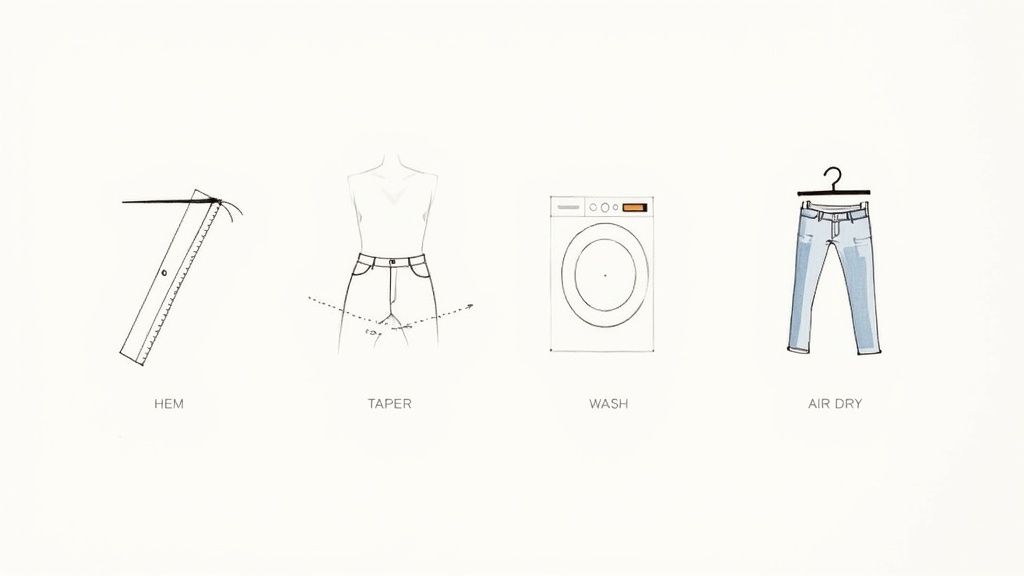
Here's a little secret from someone who lives and breathes denim: the perfect pair is often made, not just found on a rack. A little bit of tailoring can take an "almost right" pair and turn them into the custom-fit favorite you'll live in. Don't settle for a fit that’s just okay when a few simple tweaks can make it absolutely flawless.
Think of tailoring as a smart investment in your wardrobe. If you’ve found jeans that fit perfectly through the hips and thighs—which are the hardest spots to alter—but are just a smidge off somewhere else, they are 100% worth tailoring. It’s how you elevate your denim from off-the-rack to something that feels totally personalized. For anyone serious about at-home tailoring, an adjustable tailor dummy for precise fittings can be a total game-changer.
Common Alterations Worth Making
So, when is it time to head to the tailor? I always tell my clients to focus on these high-impact adjustments. They give you the most bang for your buck and are pretty straightforward for any skilled professional.
- Hemming the Length: This is probably the most common and essential alteration. Getting that inseam just right for the shoes you wear most often makes a huge difference.
- Taking in the Waist: That annoying gaping waistband? It’s a classic fit problem, but it’s such an easy fix. A quick dart or two ensures your jeans sit securely and comfortably, no belt required.
- Tapering the Leg: Sometimes you love the fit in the seat, but you want a slimmer look from the knee down. Tapering can give you that modern, streamlined silhouette you're after.
A great tailor doesn't just shorten or tighten; they preserve the original character of your jeans. My pro tip? When getting your jeans hemmed, always ask them to keep the original hem. This maintains that classic, factory-finished look we all love.
Protecting Your Perfect Fit
Okay, so your jeans now fit like a dream. The next step is to keep them that way. Proper denim care is actually pretty simple, but it's so important for preserving the color, shape, and life of the fabric. The number one enemy of good denim? Over-washing.
I only wash my jeans when they are visibly dirty or start to smell. That's it. When it is time for a cleaning, just follow a few simple rules. Always turn them inside out to protect the color from fading, and wash them in cold water on a gentle cycle.
And this is the most important part: avoid the dryer at all costs. Seriously. The high heat breaks down the fabric's fibers, especially any elastane (the stuff that gives them stretch), causing them to lose their shape and wear out way faster. Instead, just hang them up to air-dry. It’s a simple habit that will dramatically extend the life of your favorite pair and keep that perfect, tailored fit intact for years.
Answering Your Final Jean Questions
Even after you've narrowed it down, a few last-minute questions always seem to pop up in the fitting room. You know, the ones that have you hovering over the "add to cart" button, second-guessing everything.
Let's get those final hurdles out of the way so you can click "buy" with total confidence. These are the little details that make all the difference.
Should I Buy Jeans That Are a Little Tight?
Ah, the classic fitting room dilemma. The answer really comes down to the fabric tag.
If you see 2% or more elastane (or spandex), it’s actually a good idea to buy them snug. Denim with stretch is made to give and mold to your body, so starting with a slightly tighter fit means they won't get all baggy and sad after a few wears.
But for that 100% cotton rigid denim? Nope. You need to buy those to fit comfortably right from the start. They’ll soften up and give a little, sure, but they won't stretch out. The ultimate test for any pair is to just sit down. If they're pinching or feel super restrictive, they’re too tight.
How Do I Know Which Rise Is Best for My Torso?
Okay, this is all about creating balance. It’s less about how tall you are and way more about your torso-to-leg ratio.
- Long Torso: You’re going to look amazing in a high-rise or even an ultra-high-rise jean. It visually shortens your torso and makes your legs look a mile long. It’s all about creating that beautiful, balanced silhouette.
- Short Torso: A mid-rise is your best friend. A low-rise can also be super flattering. These styles don't sit so high that they make your upper body seem even shorter.
Not sure where your natural waist is? Just bend to one side. That little crease that forms is your target—that’s where a perfect mid-rise should hit.
What’s the Difference Between Straight Leg and Slim Fit?
They sound almost the same, but the vibe is totally different. It all comes down to the leg opening.
A slim fit is cut narrow all the way down—hip, thigh, and leg. It usually tapers a bit toward the ankle, following the natural shape of your leg without being skin-tight like a skinny jean. It’s more of a contouring fit.
A straight leg, on the other hand, pretty much keeps the same width from the knee down to the hem. This creates a really clean, straight line from your hip down, giving you a bit more breathing room around your calf and ankle than a slim fit would.
Ultimately, choosing the right jeans is all about what makes you feel comfortable and confident. Think of these tips as a starting point, but always trust your gut and how a pair makes you feel.
Here at Lenny Lane, we truly believe the perfect pair is out there waiting for you. Come explore our denim collection from amazing brands we love, all picked to flatter every body and style. Let us help you find your new favorite pair!
Find your perfect fit over at LennyLane.com.